Archaeologists recreate Pompeii victim using AI technology
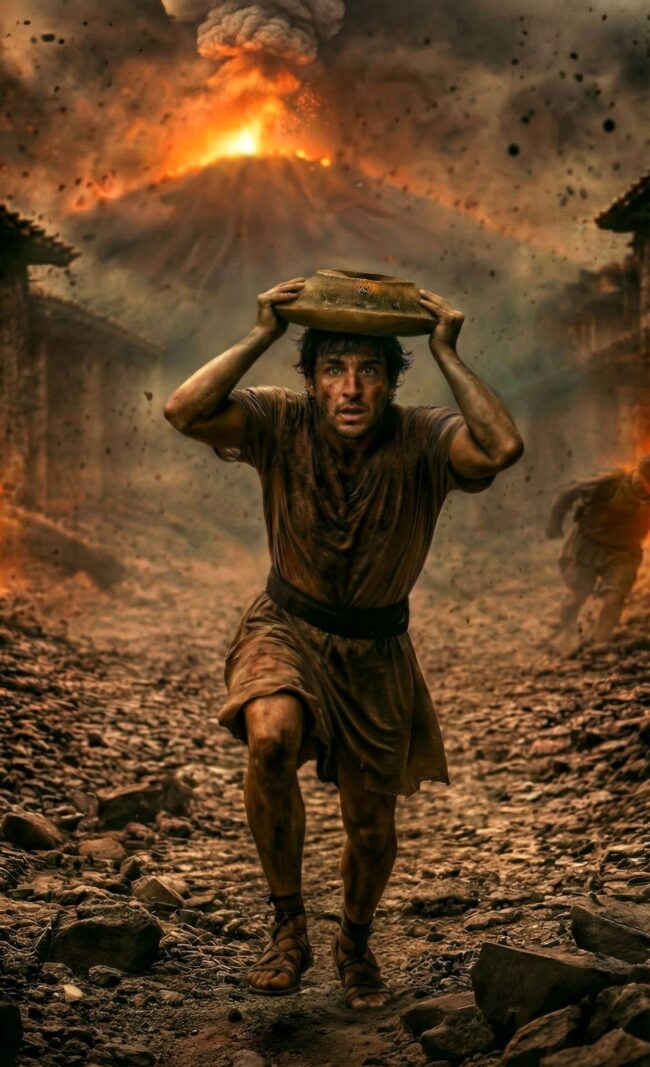
In 79 CE, Mount Vesuvius erupted above Pompeii, Italy, filling the air with flying rocks. A man ran through the streets of the Porta Stabia neighborhood, holding a terracotta bowl over his head for protection from the heavy shower of volcanic ash. But it wasn’t enough. He didn’t escape the devastation.
In 2024, archaeologists unearthed the skeleton of this man just outside one of Pompeii’s busiest gates. They found him curled up with the fractured terracotta bowl near his head. He also carried a ceramic lamp in an attempt to see through the ash-darkened streets. And he wore a small iron ring on his left little finger and carried 10 bronze coins.
On April 27, 2026, the Pompeii Archaeological Park in Italy said that, for the first time, it has reconstructed the moments just before the man’s ultimate fate, using AI digital technology.
Researchers used artificial intelligence software and photo editing techniques to create the image above. They wanted to present a scientifically sound image that was still accessible to the general public.
Archaeology and AI
The Pompeii Archaeological Park, in collaboration with the University of Padua – Digital Cultural Heritage Laboratory and the Ministry of Culture, created the AI reconstruction based on the skeleton and nearby materials. Minister of Culture Alessandro Giuli talked about the intersection of excavations and AI. Giuli said:
The investigations conducted with these excavations demonstrate that innovative methodologies, used rigorously, can offer us new historical perspectives.
Pompeii’s director Gabriel Zuchtriegel added:
The vastness of archaeological data at Pompeii and beyond is now such that only with the help of artificial intelligence will we be able to adequately protect and enhance it. If used well, AI can contribute to a renewal of classical studies, narrating the classical world in a more immersive way.
And Jacopo Bonetto of the University of Padua said:
The project opens a broader debate on the use of AI in archaeology: a technology that can contribute to the production of interpretative models and the improvement of communication tools, but which requires controlled and methodologically sound use, always in integration with the work of specialists.
Reconstructing the last moments
Luciano Floridi is the founding director of the Digital Ethics Center at Yale. Floridi said:
The man of Pompeii fled with a mortar on his head, a lamp in his hand, and ten coins: he carried whatever he thought was useful for orienting himself in the darkness. Two thousand years later, AI is helping us reconstruct his last moments.
AI does not replace the archaeologist. Under its control, it expands and deepens his potential and makes accessible to many what was previously accessible only to a few. Without AI, much of the heritage risks remaining unexplored for those who practice archaeology, and silent for those who love it …
AI produces hypotheses, not truths. Hypotheses must be reviewed, discussed, corrected, integrated, approved. Scientific responsibility cannot be delegated. But the risk is not that AI makes mistakes: it’s that we stop thinking by using it. The humanities teach us precisely this, to distinguish reconstruction from fantasy. Pompeii, once again, is the great laboratory that teaches us.
Pliny the Younger
The story of this man who ran for his life while trying to protect his head echoes the stories told by an eyewitness. Pliny the Younger wrote two accounts of the eruption at Pompeii. In them, he described people trying to protect their heads with objects, including tying pillows to their heads.
Photos from the excavation
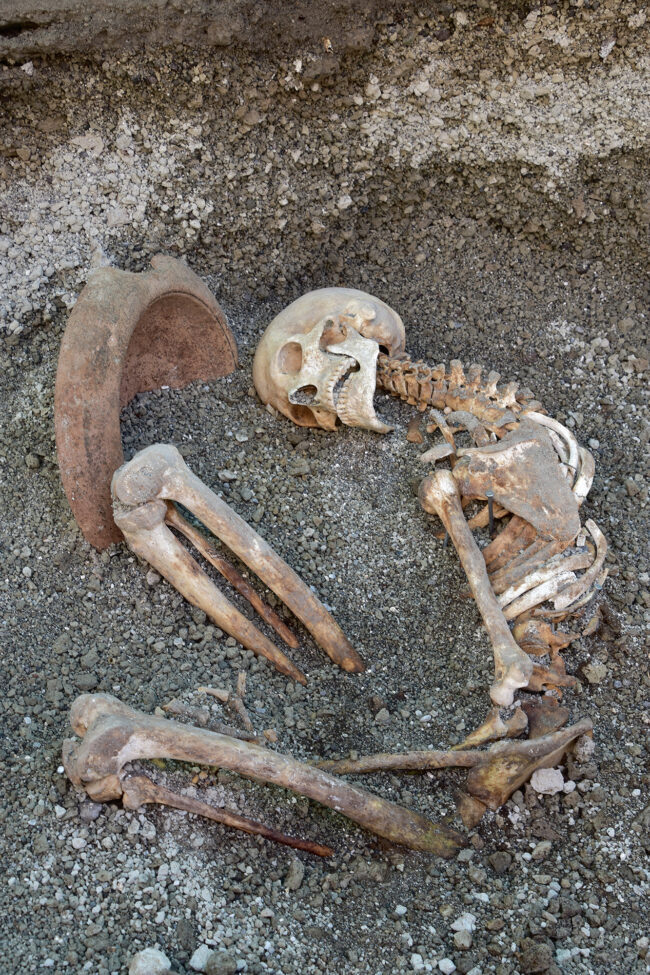
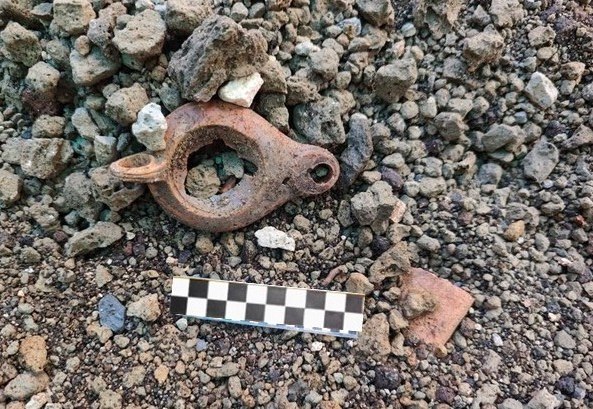
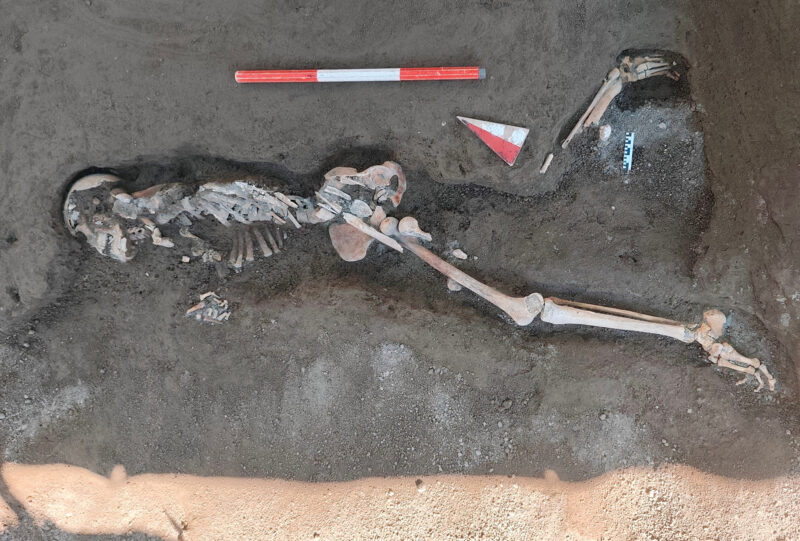
Bottom line: Archaeologists have used AI technology to recreate a Pompeii victim. The man fled the volcano while trying to protect his head with a terracotta bowl.
Like what you read?
Subscribe and receive daily news delivered to your inbox.
More from
Kelly Kizer Whitt


And the Fat Bear Week winner is … Backpack!

What are the world’s loudest birds? Here are 2 contenders
Visible planets and night sky guide for October
JUICE mission completes flyby of Earth: New pics!