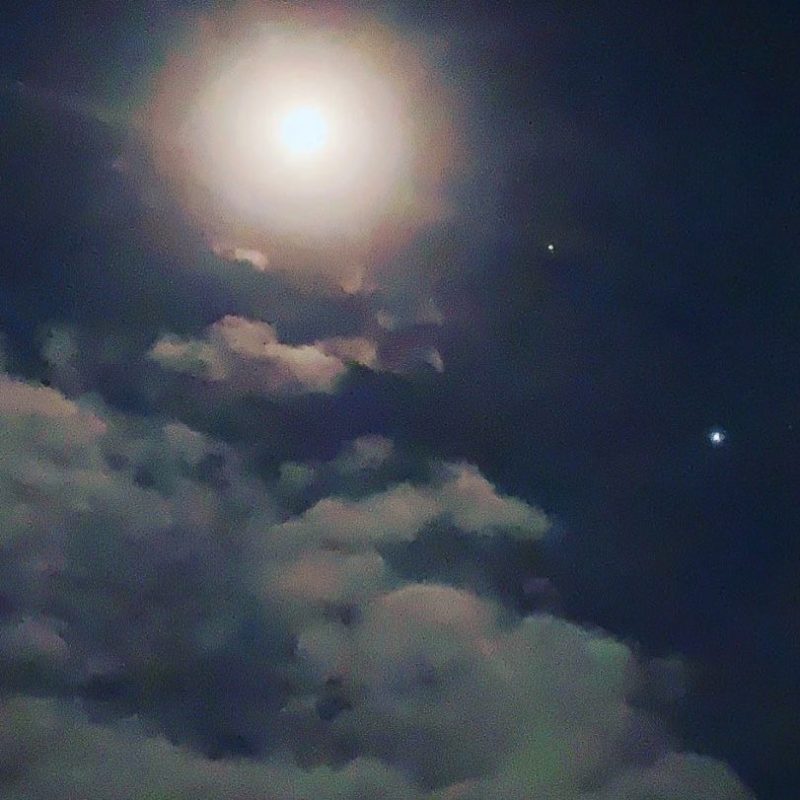
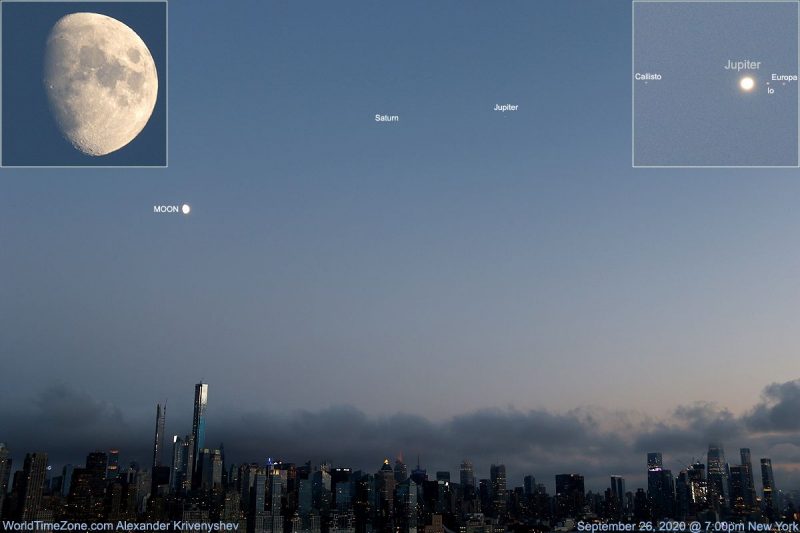
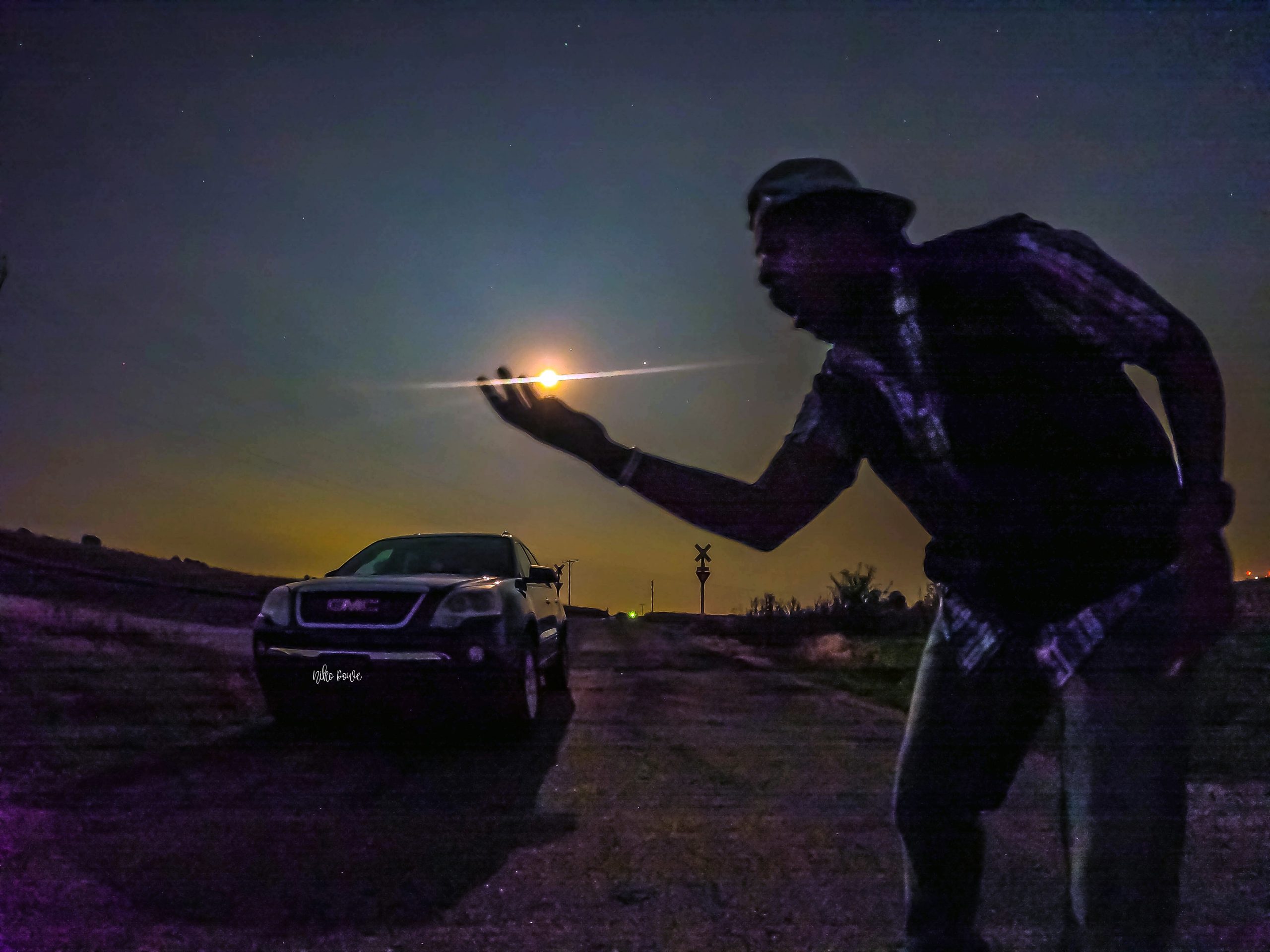
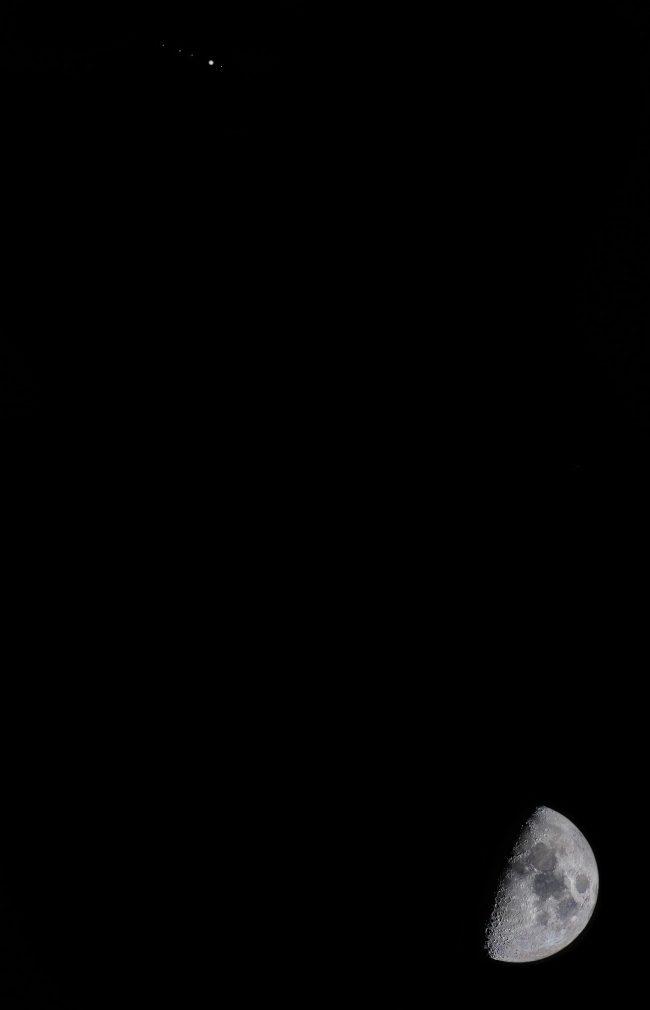
View at EarthSky Community Photos. | The moon swept past Jupiter and Saturn on the nights of September 23 to 26. Gene Hettel in Calamba, Laguna, Philippines, caught the bright trio on September 26. Thank you, Gene.View at EarthSky Community Photos. | Jupiter and Saturn are headed for a great conjunction before 2020 ends. Our friend Alexander Krivenyshev of the website WorldTimeZone.com caught this shot on September 26, 2020, and wrote: “Twilight view of the moon, Jupiter (with its moons) and Saturn over the New York City skyline.” Thank you, Alexander.View at EarthSky Community Photos. | Niko Powe captured this self-portrait along with the moon and planets on September 25, 2020. He wrote: “Catching the moon, Jupiter, and Saturn in Kewanee, Illinois! Have a pleasant evening.” Thank you, Niko!View larger at EarthSky Community Photos. | John Nelson was at Puget Sound, Washington, on September 24, 2020, when he captured this image. See Jupiter and its moons in the upper left? John wrote: “We had fairly heavy rain all day (September 24) so I wasn’t expecting to be able to see the Jupiter/moon conjunction but was pleasantly surprised when the clouds cleared out for a few hours. It would have been nice if Jupiter was a little closer but I was happy to catch the conjunction. All 4 Galilean moons were visible. I brightened them up just a bit in Photoshop Elements so they would be easier to see in a photo that you can’t zoom in on. From left to right, the moons are Callisto, Ganymede, Europa and just to Jupiter’s right is Io.” Thank you, John.
Bottom line: Photos from the EarthSky community of the moon’s sweep past our solar system’s biggest planets – Jupiter and Saturn – in late September 2020.
Deborah Byrd (asteroid 3505 Byrd) helps edit EarthSky.org and is a frequent host of EarthSky videos. Deborah created the EarthSky radio series in 1991 and founded EarthSky.org in 1994. Prior to that, she had worked for the University of Texas McDonald Observatory since 1976, and created and produced their Star Date radio series. She has won a galaxy of awards from the broadcasting and science communities, including having an asteroid named in her honor in 1990, a Public Service Award from the National Science Board in 2003, and the Education Prize from the American Astronomical Society in 2020. A science communicator and educator since 1976, Byrd believes in science as a force for good in the world and a vital tool for the 21st century. "Being an EarthSky editor is like hosting a big global party for cool nature-lovers," she says.
Like what you read? Subscribe and receive daily news delivered to your inbox.
Thank you! Your submission has been received!
Oops! Something went wrong while submitting the form.