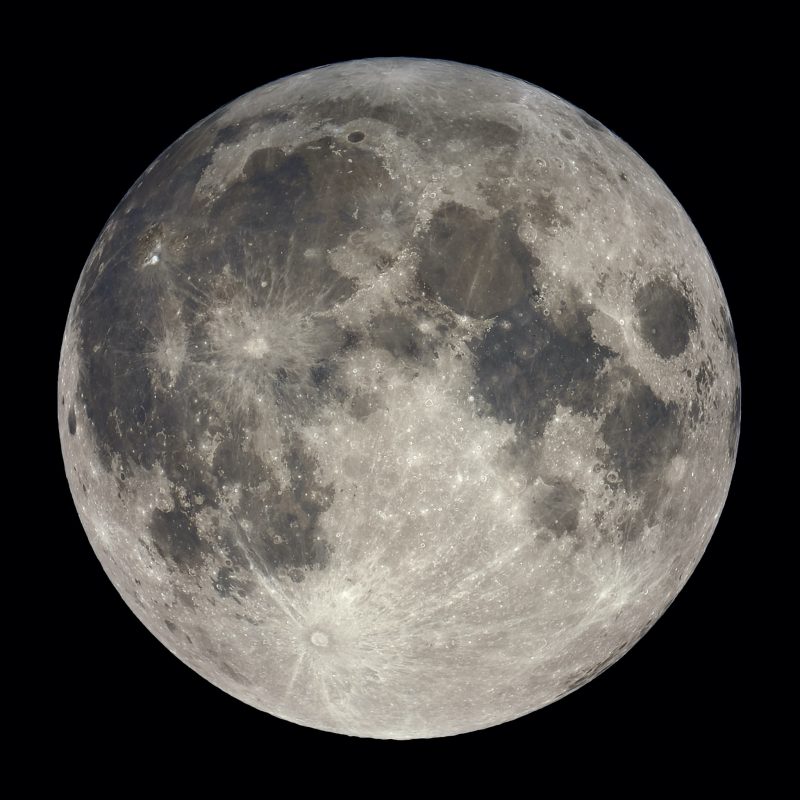
View at EarthSky Community Photos. | Rob Pettengill in Austin, Texas – an experienced moon photographer – caught this image of the full moon Saturday night, July 4, 2020, one minute before midnight, at the height of the partial penumbral eclipse. He wrote: “A beautiful full moon for Independence Day in the United States, but where did the eclipse go? Partial penumbral eclipses are very subtle. Only a small sliver of the sun is hidden by the Earth, in roughly the top third of this image. This small gradual change in illumination is almost impossible to detect without careful photometric measurement.” Thanks, Rob!
By all reports, the faint partial penumbral lunar eclipse of July 4-5, 2020, was barely discernible (if that), even by experienced observers. At maximum eclipse, only about a third of the moon was covered by Earth’s faint, outer penumbral shadow. And – for most of us – that’s not enough to make the eclipse visible, according to experts.
During past lunar eclipses, I have made a concerted effort to determine when I can first see the subtle shading of Earth’s penumbral shadow on the moon (using unaided eye and binoculars). I have consistently found the penumbral shading is only detectable when at least 2/3 of the moon lies within the penumbral shadow.
Since the moon will only pass 1/3 of the way into the penumbral shadow during the July 4/5 lunar eclipse, it will not be visible to the unaided eye. But digital photography can reveal the subtle shading if the contrast of the image is greatly increased.
On the other hand, it’s been my experience that people’s powers of observation vary greatly. Some people have exceptional eyesight. Some have a really remarkable ability to notice subtle details. If that’s you, and you noticed Earth’s shadow on the moon during this eclipse, let us know in the comments below!
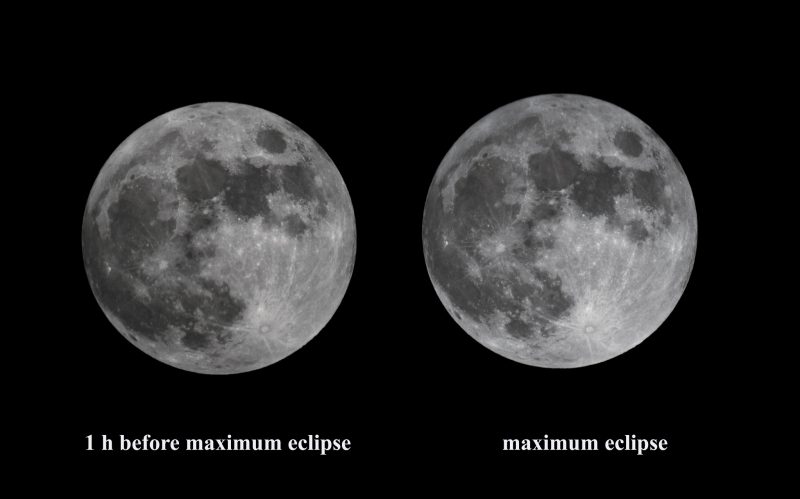
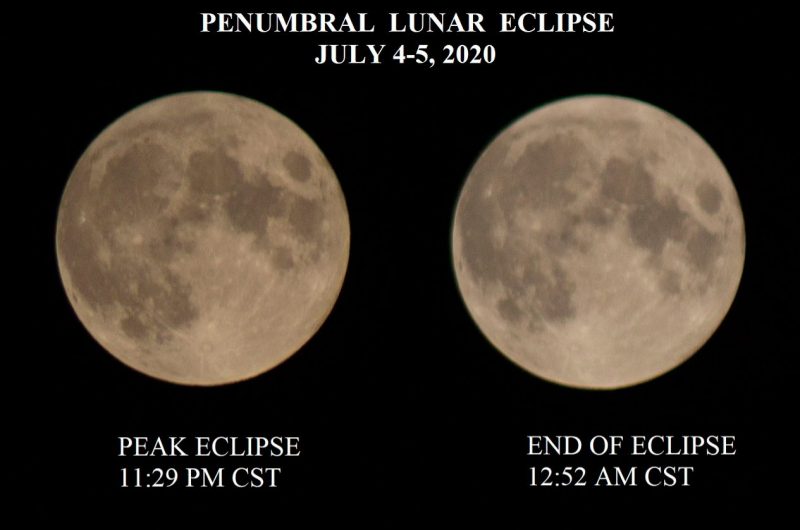
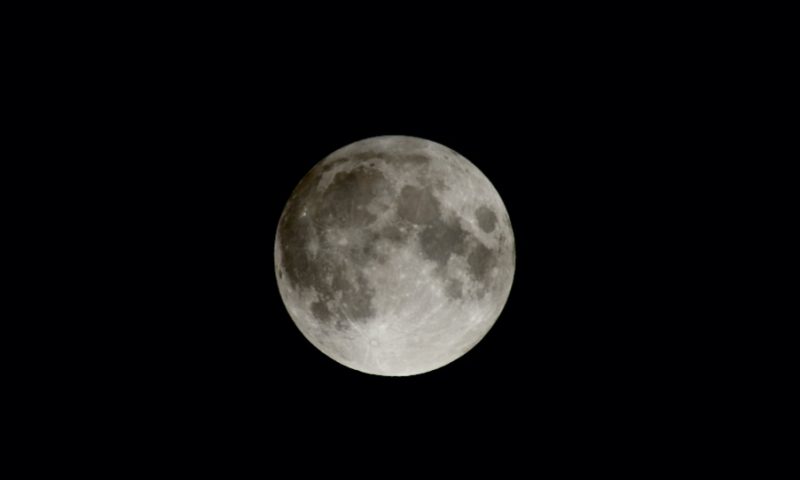
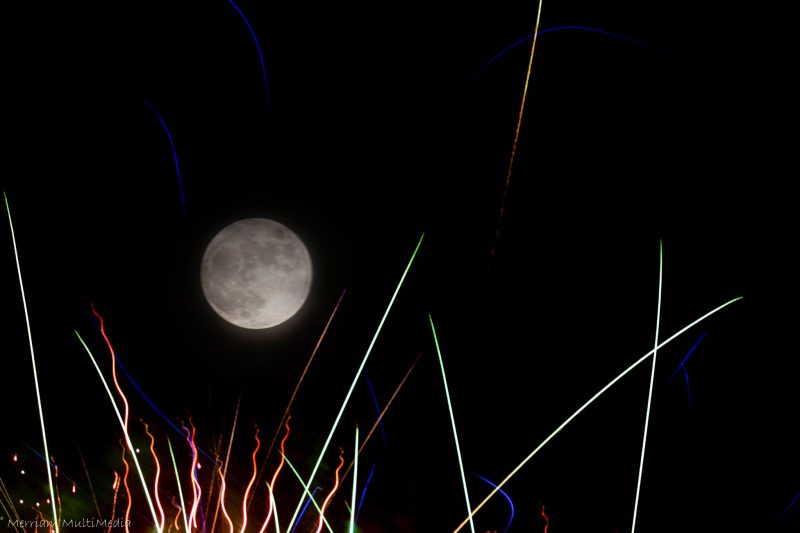
Eliot Herman in Tucson, Arizona – another experienced sky photographer – told EarthSky: “The eclipse was mostly a bust, but I do think there was a slight shadow. This is a side-by-side comparison of the moon one hour before, and at, maximum eclipse. There appears to be a very slight shading in the north of the moon as expected by prediction. These images were acquired in Tucson under somewhat degraded seeing from the Bighorn fire smoke particles still in the sky. The capture equipment is a Questar telescope and a Nikon D850. The exposures were matched closely as possible and the imagery was processed as a duo unit as to be identical.” Thank you, Eliot!View at EarthSky Community Photos. | Iqbal Khan in Columbia, Missouri, wrote: “A subtle penumbral lunar eclipse.” Thank you, Iqbal!View at EarthSky Community Photos. | Greg Redfern in central Virginia wrote: “Taken at maximum eclipse for the penumbral lunar eclipse. MAY be some shading in the upper left quadrant.” Thank you, Greg.View at EarthSky Community Photos. | On the other hand, many in the U.S. Saturday night enjoyed seeing the full moon along with neighborhood fireworks. John Merriam in St. Augustine, Florida, wrote: “The moon was hidden by quite a few clouds from a very stormy day but later in the night the clouds began to break and fireworks lit up the sky all over the neighborhood we live in. July 4th, 2020.” Thank you, John!View at EarthSky Community Photos. | “My family had fun watching the full moon near the July 4 fireworks last Saturday night, too,” wrote Deborah Byrd of EarthSky.
Bottom line: Even experienced observers say they couldn’t discern the Earth’s shadow on the moon during the partial penumbral eclipse of July 4-5, 2020. Did you see it? Do your photos show it? Let us know in the comments below, or post at EarthSky Community Photos.
Deborah Byrd (asteroid 3505 Byrd) helps edit EarthSky.org and is a frequent host of EarthSky videos. Deborah created the EarthSky radio series in 1991 and founded EarthSky.org in 1994. Prior to that, she had worked for the University of Texas McDonald Observatory since 1976, and created and produced their Star Date radio series. She has won a galaxy of awards from the broadcasting and science communities, including having an asteroid named in her honor in 1990, a Public Service Award from the National Science Board in 2003, and the Education Prize from the American Astronomical Society in 2020. A science communicator and educator since 1976, Byrd believes in science as a force for good in the world and a vital tool for the 21st century. "Being an EarthSky editor is like hosting a big global party for cool nature-lovers," she says.
Like what you read? Subscribe and receive daily news delivered to your inbox.
Thank you! Your submission has been received!
Oops! Something went wrong while submitting the form.