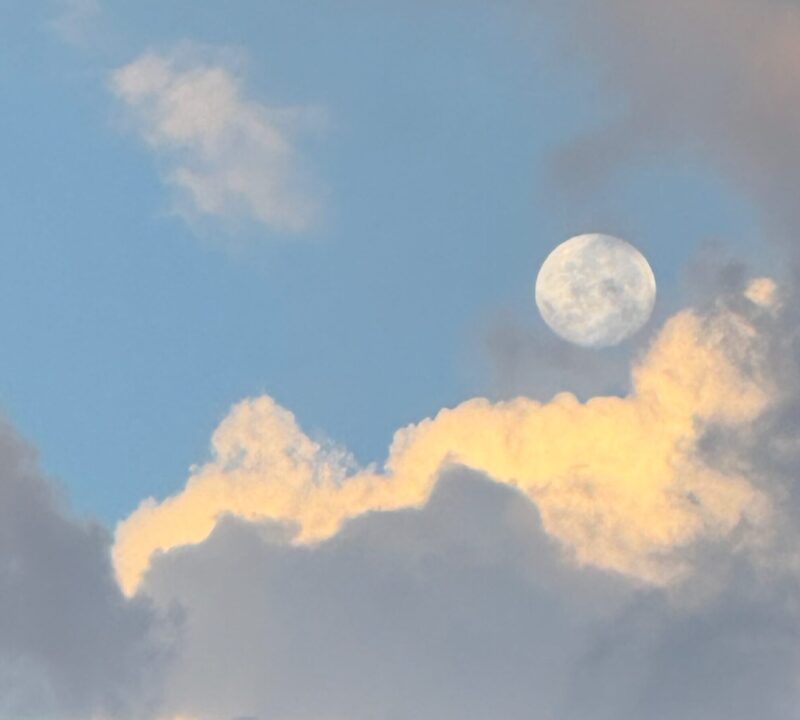
Watch for the daytime moon
The moon is up in the daytime half of the time. But, because it’s pale against the blue sky, it’s not as noticeable during the day as at night. Still, there are certain windows each month during which the daytime moon is most noticeable.
This week presents one of those windows. It’s a good time to watch for a daytime moon in the morning sky. The full Harvest Moon was Saturday (September 26, 2026). So this week you’ll find the moon in a waning gibbous phase, appearing more than half lighted but less than full. Full moons rise at sunset. But waning gibbous moons rise later – and later – on each successive night.
And that means the moon sets later and later now, too. In the days following every full moon, you’ll find the moon setting in the west after sunrise. That makes the mornings following a full moon a good time to catch a daytime moon. Watch for it during this week, after sunrise, over your western horizon. It’ll appear pale against the blue sky.
Thanks to what’s called the moon illusion, you might notice the daytime moon looking huge when close to the horizon.
When is last quarter moon?
And the moon will continue to wane. The last quarter moon — where the moon presents exactly half of its “day” or illuminated side to Earth — will fall at 13:25 UTC on October 3, 2026. Last quarter moons rise in the middle of the night (no matter where you are on the globe). And they set around midday. Watch for the last quarter moon high in the sky before dawn.
Daytime moon photos from the EarthSky community
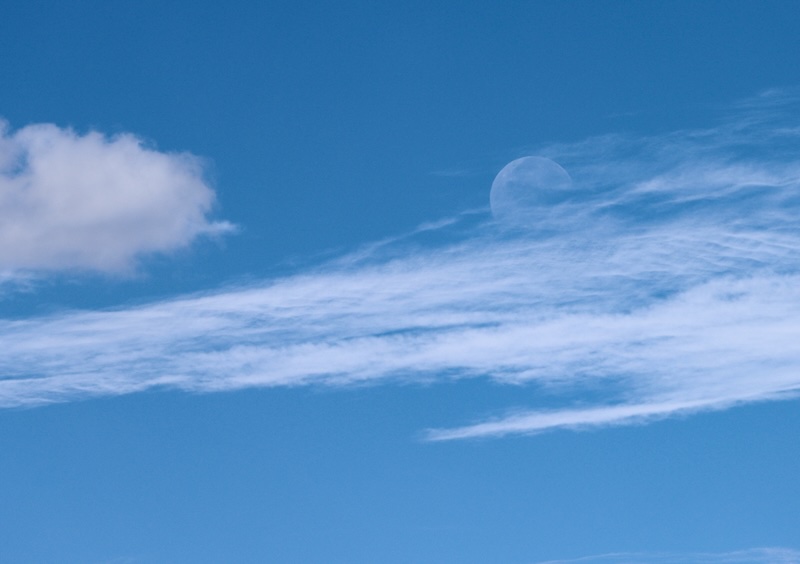
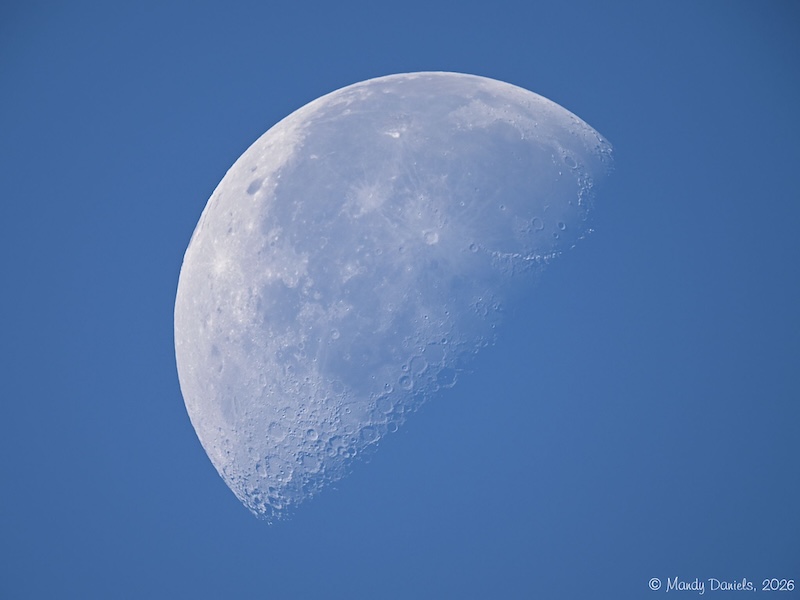


Bottom line: Watch for the beautiful daytime moon this week, a pale orb floating against a blue sky in the morning hours. Look west! You’ll see it!
Like what you read?
Subscribe and receive daily news delivered to your inbox.
More from
Editors of EarthSky


We fly between the sun and Saturn. At opposition today

October birthstone: Colorful opal and tourmaline
Neptune at opposition on September 26, 2026
Seeing Saturn’s rings: Top tips for beginners