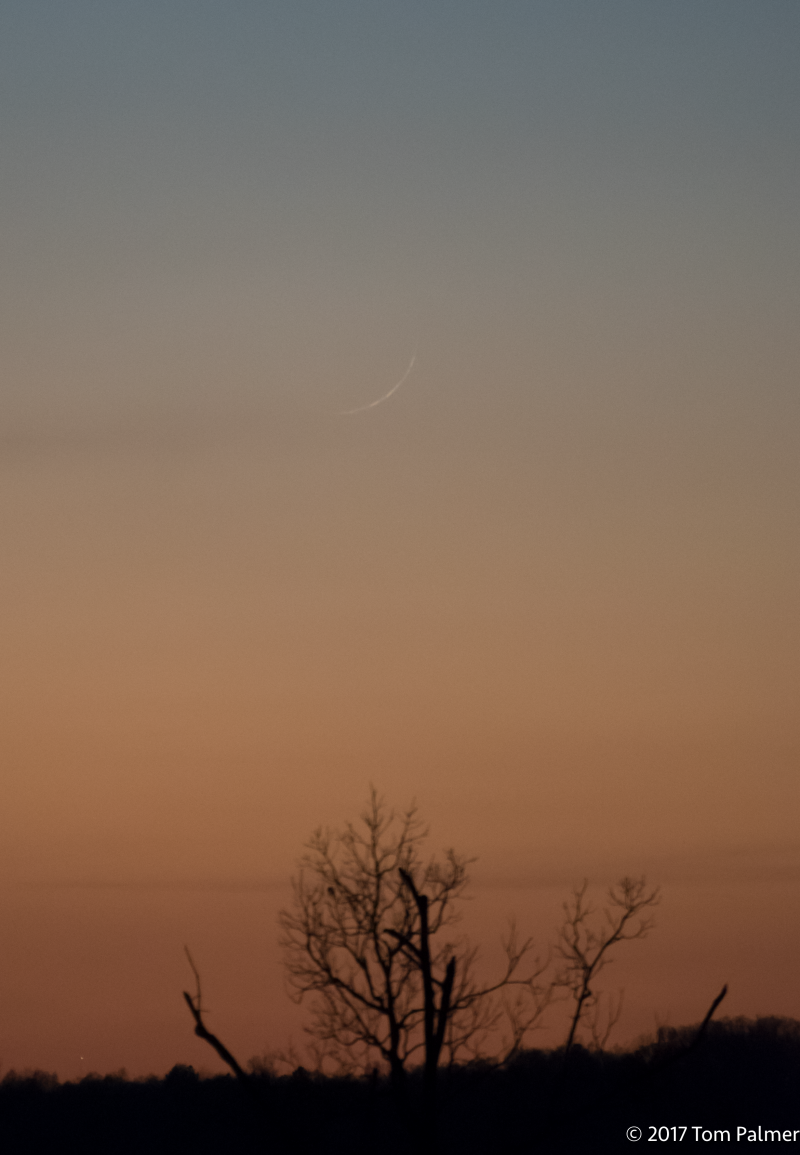
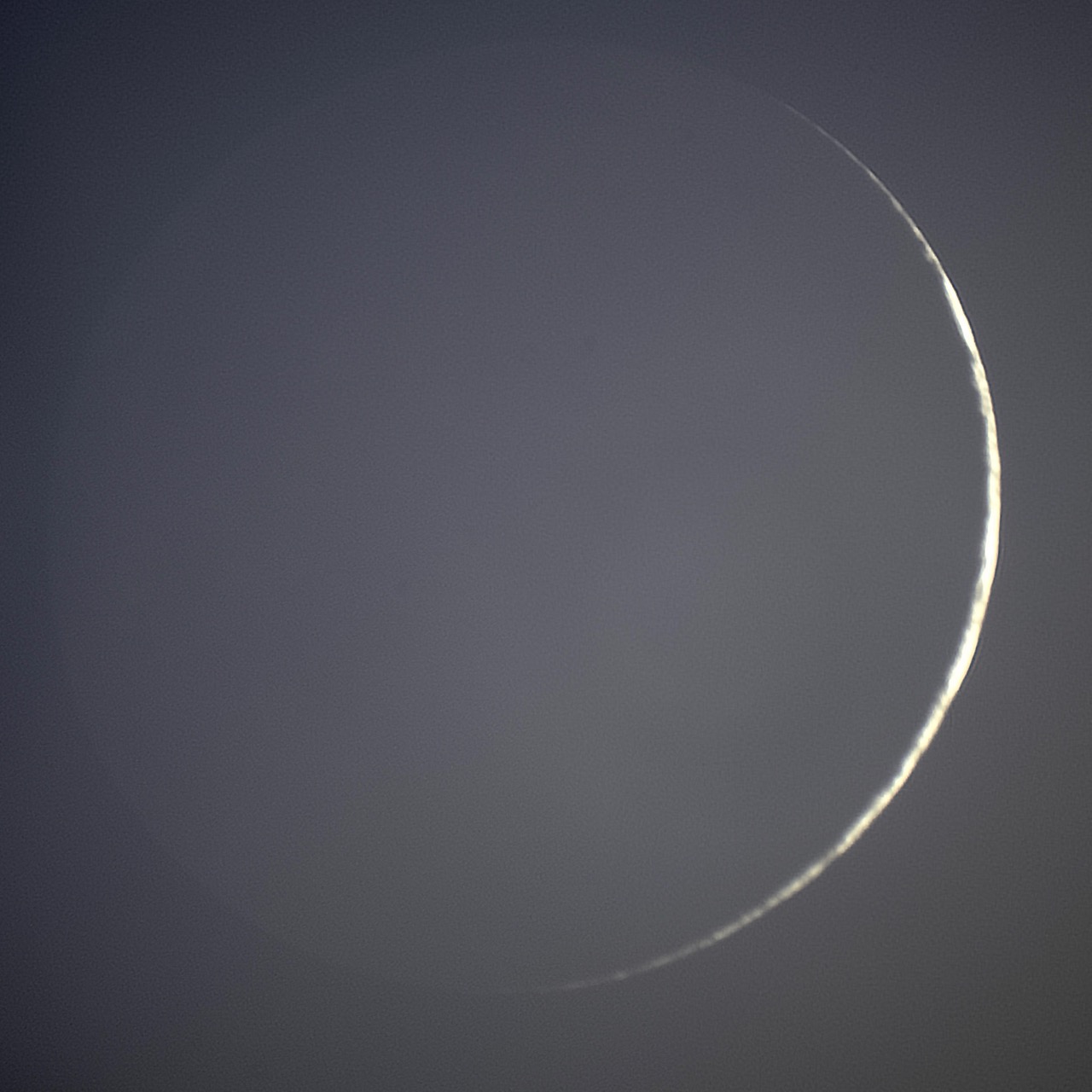
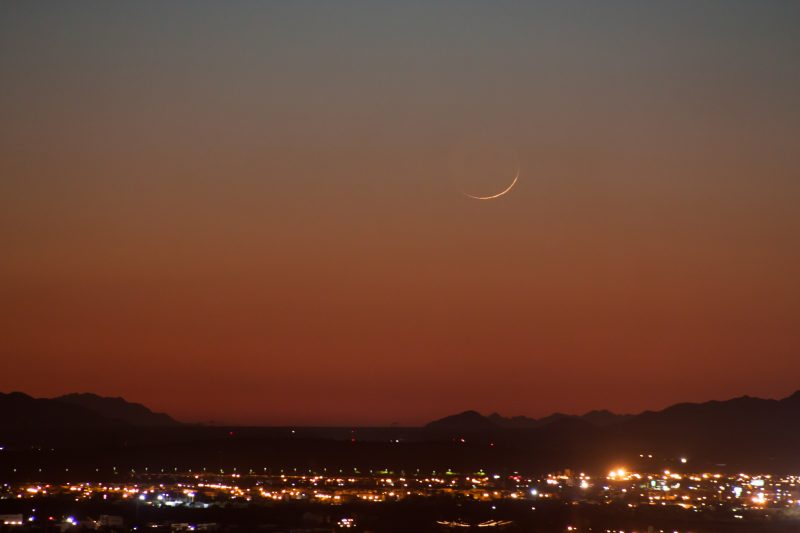
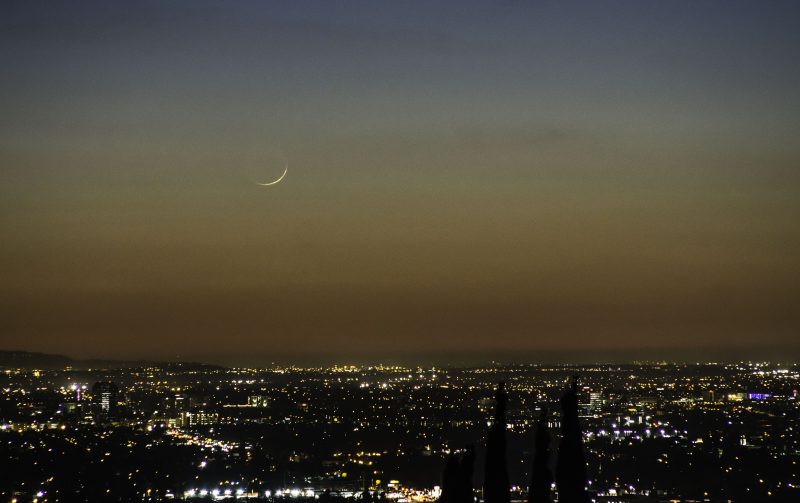
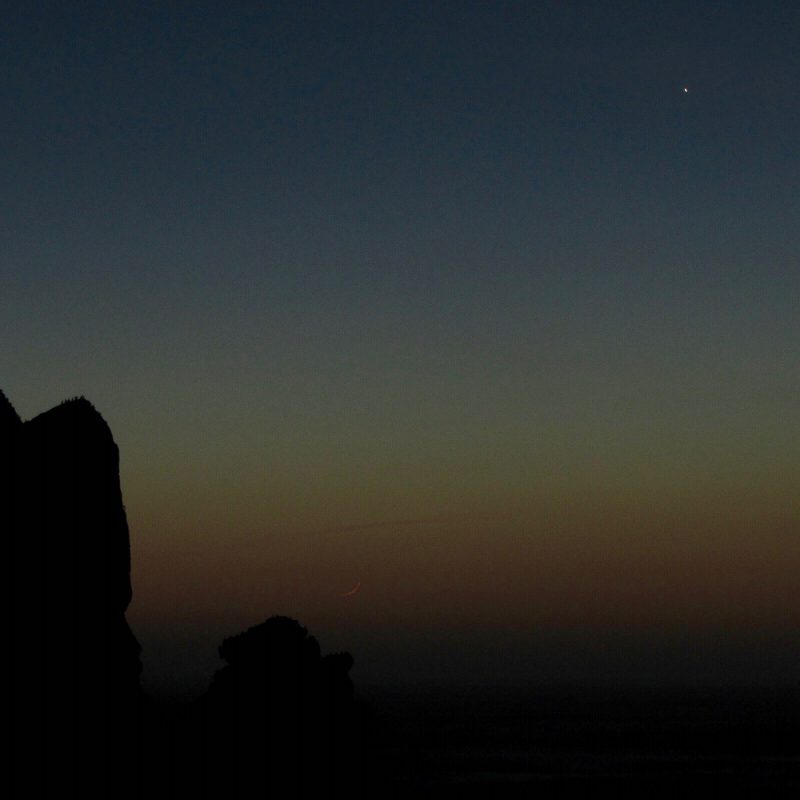
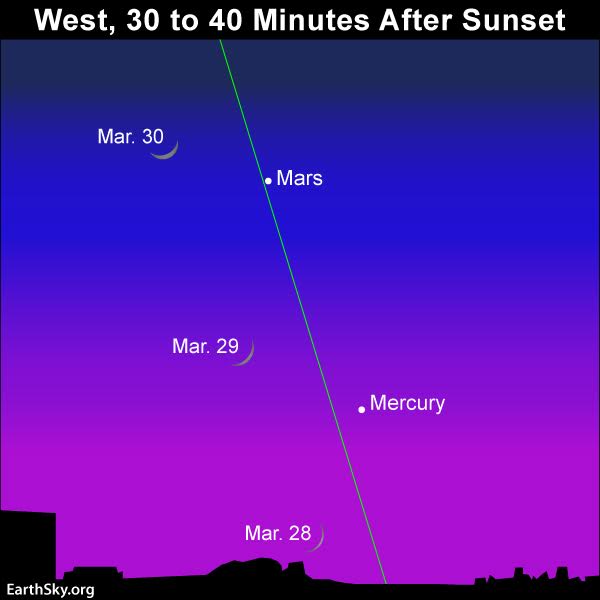
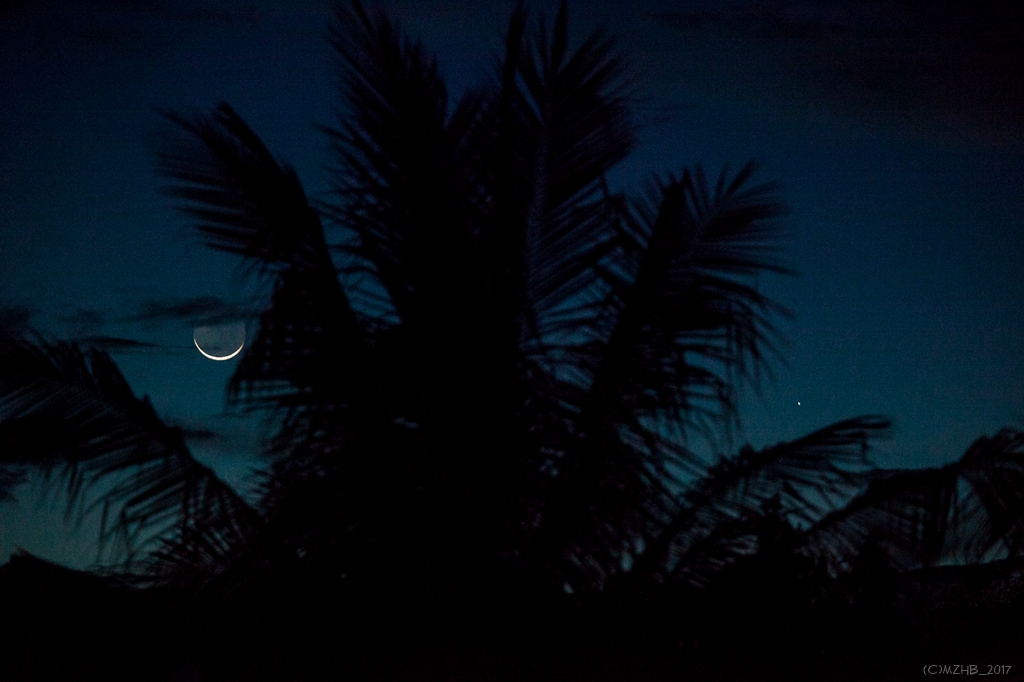
From the eastern edge of North America, the moon was extremely young, and particularly tough to spot. Tom Palmer in Carrboro, North Carolina wrote: “I first spotted the moon about 7:50 p.m. in 10×50 binoculars. Shortly after that I was able to see it with the naked eye. This picture was taken when it was almost exactly 21 hours old.”Eliot Herman’s capture of the moon from Tucson, Arizona took place when the moon was older – 23 hours, 30 minutes old. Now the moon – moving continuously in its orbit around Earth – has shifted farther from the sun on our sky’s dome and is showing us slightly more of its lighted face than a few hours ago. This moon is 1.5% illuminated. This photo is a stack of 15 images captured with a Questar Q3.5 telescope, a 0.7X focal reducer, and a Nikon D500 camera @ iso 1600.Hector Barrios caught the young moon from Hermosillo, Mexico. Notice how deeply buried the moon is – in all of these photos – in the evening twilight.By the time the moon was visible to those in California, it was a few hours older. Steve Christle wrote: “The one day old Moon this evening setting over Orange County, looking towards the South Bay area of LA.”Spencer Mann also caught the very young moon. See it, nearly buried in the twilight, just above the rocks? The March 28 moon was below the planet Mercury (upper right in this photo). Photo taken over Morro Bay, California. The moon will be moving up past Mercury, and the planet Mars, in the west after sunset in the evenings ahead.Watch for the waxing crescent to move up past Mercury and Mars on March 29 and 30. Read more.As Earth’s line of sunset crossed the International Date Line – as March 28 turned to March 29 – the moon continued to move eastward in its orbit, or higher in the west after sunset. Here are the moon and Mercury on March 29, 2017 – as seen just west of the International Date Line – by Zefri Besar in Brunei Darussalam. Thanks, Zefri!
Bottom line: Photos from the EarthSky community of the very young moon over North America on March 28, 2017.
Deborah Byrd (asteroid 3505 Byrd) helps edit EarthSky.org and is a frequent host of EarthSky videos. Deborah created the EarthSky radio series in 1991 and founded EarthSky.org in 1994. Prior to that, she had worked for the University of Texas McDonald Observatory since 1976, and created and produced their Star Date radio series. She has won a galaxy of awards from the broadcasting and science communities, including having an asteroid named in her honor in 1990, a Public Service Award from the National Science Board in 2003, and the Education Prize from the American Astronomical Society in 2020. A science communicator and educator since 1976, Byrd believes in science as a force for good in the world and a vital tool for the 21st century. "Being an EarthSky editor is like hosting a big global party for cool nature-lovers," she says.
Like what you read? Subscribe and receive daily news delivered to your inbox.
Thank you! Your submission has been received!
Oops! Something went wrong while submitting the form.