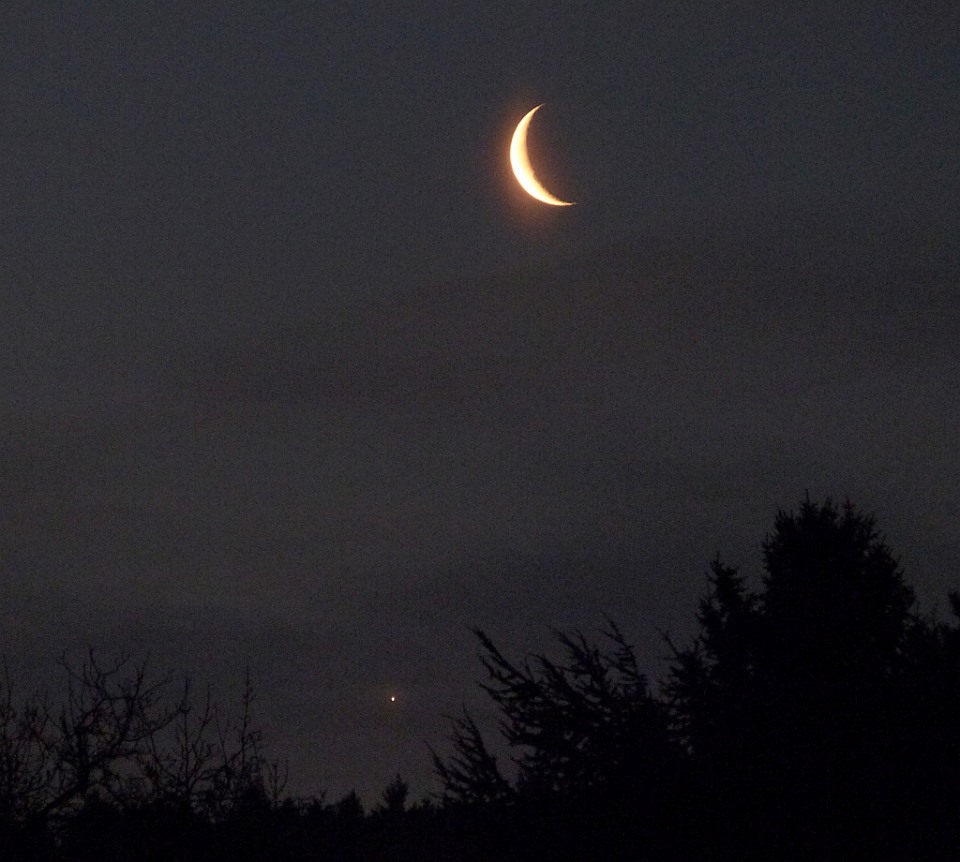
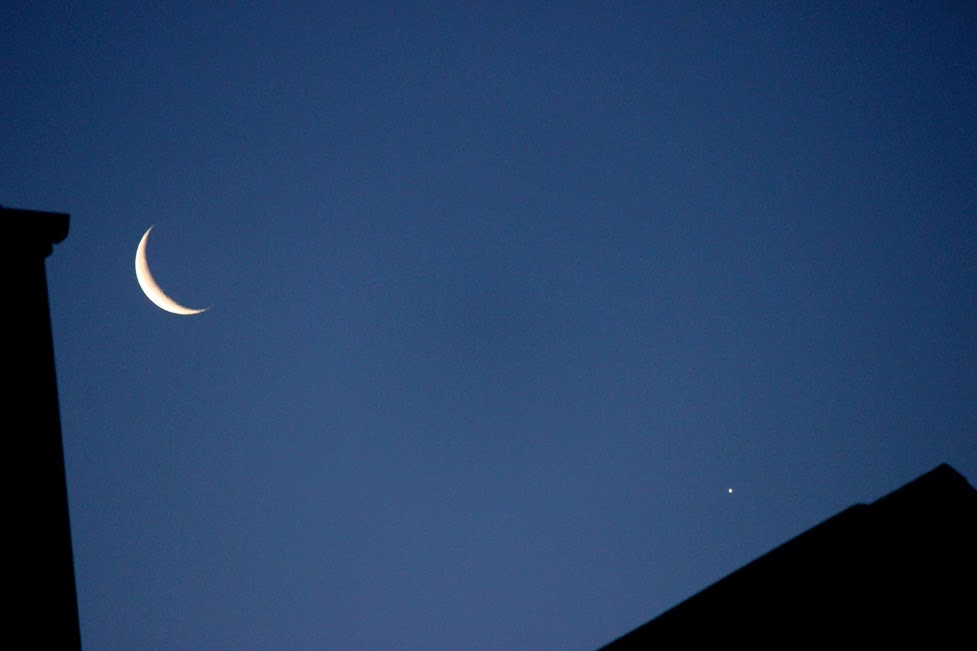
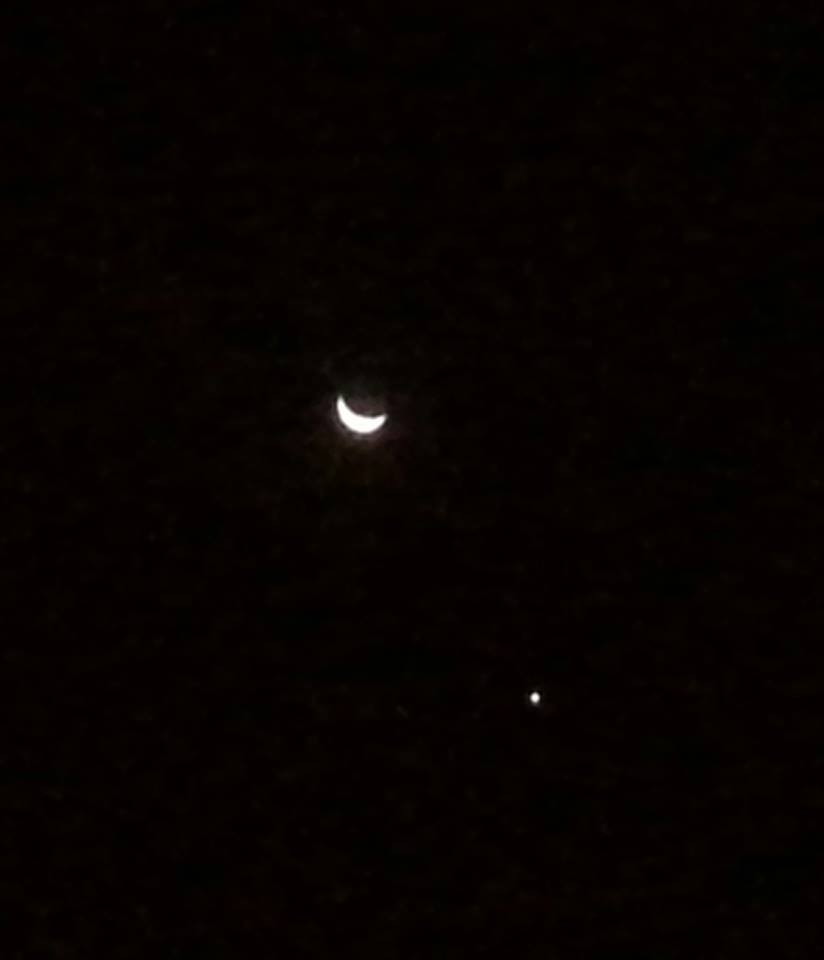
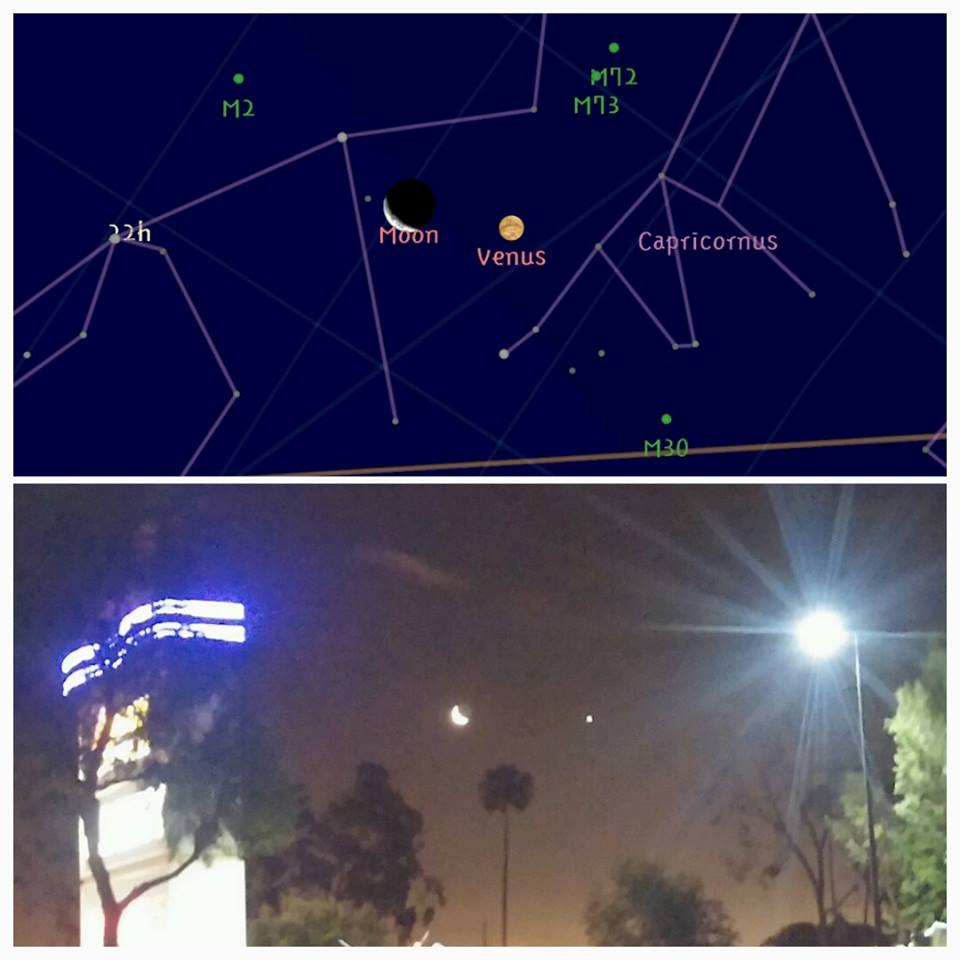
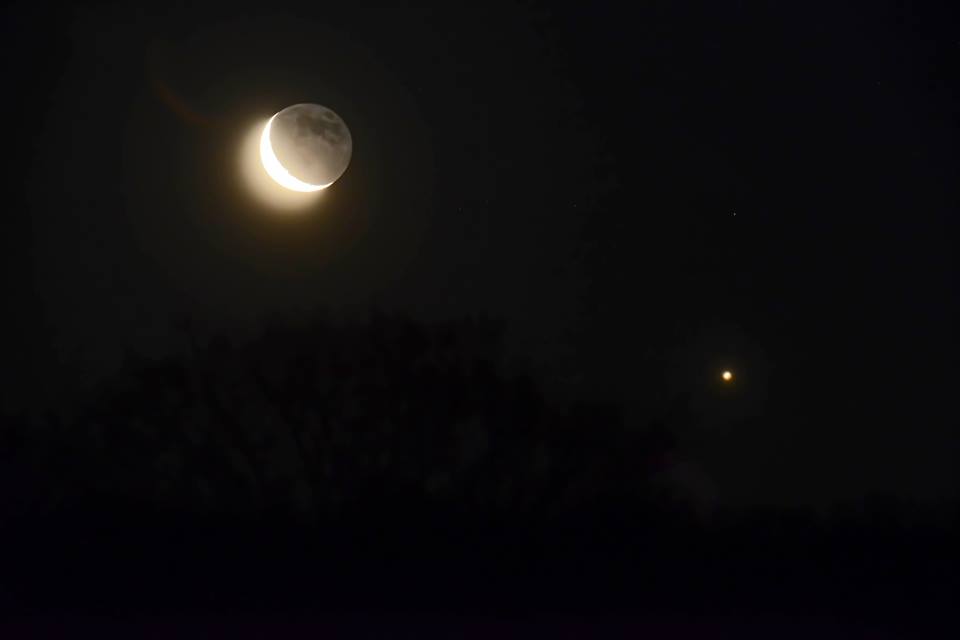
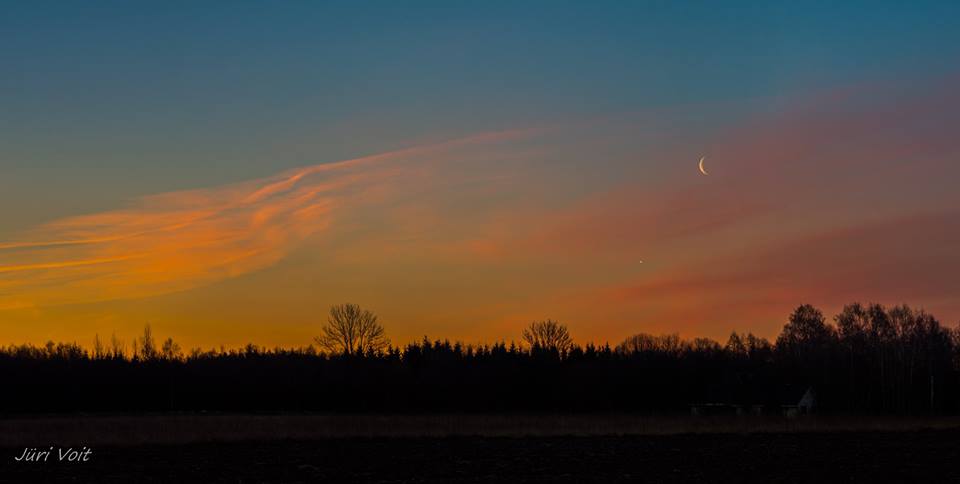
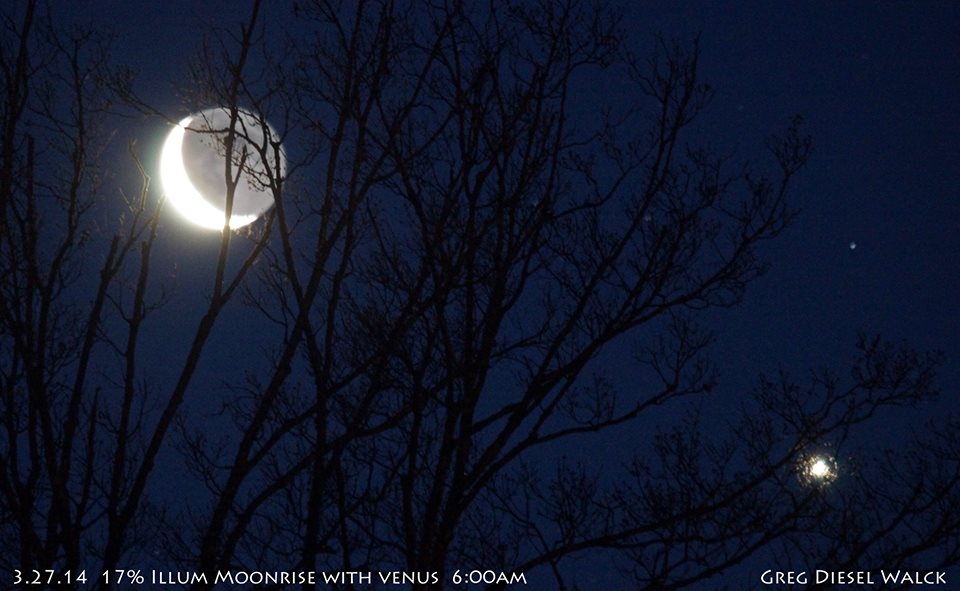
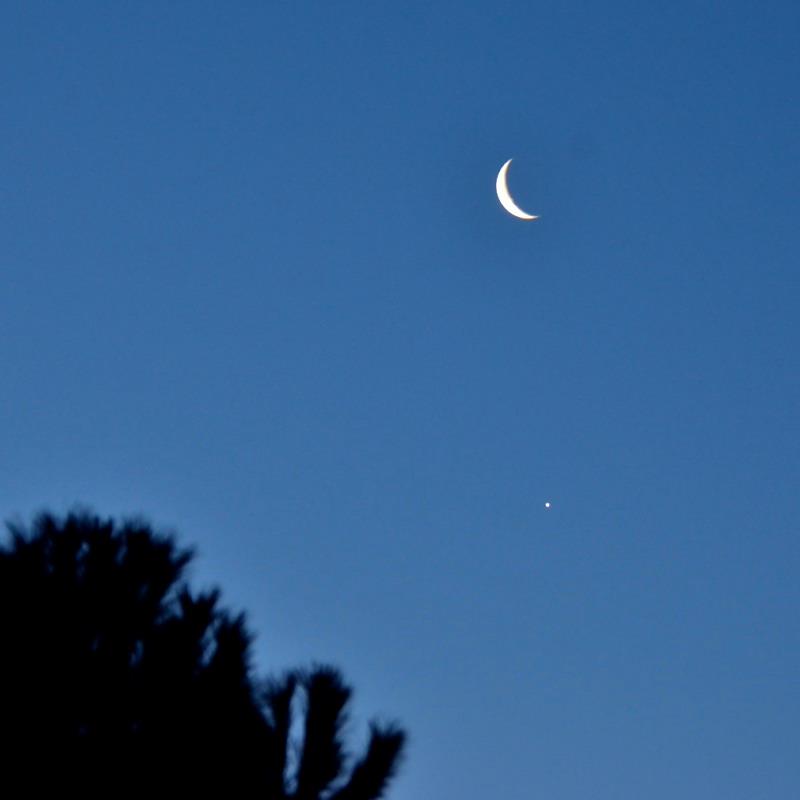
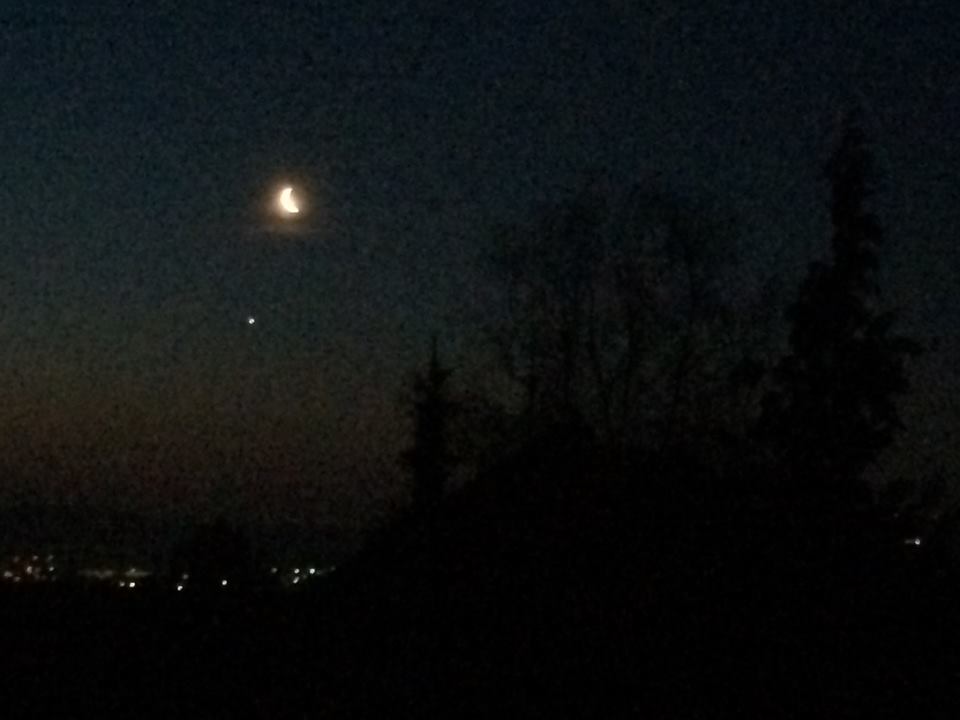
So many of you posted wonderful shots of this morning’s pairing of the moon with the brightest planet, Venus in the predawn sky today and yesterday (March 27 and 28). Here are a few of our favorites. Thanks to all who posted!
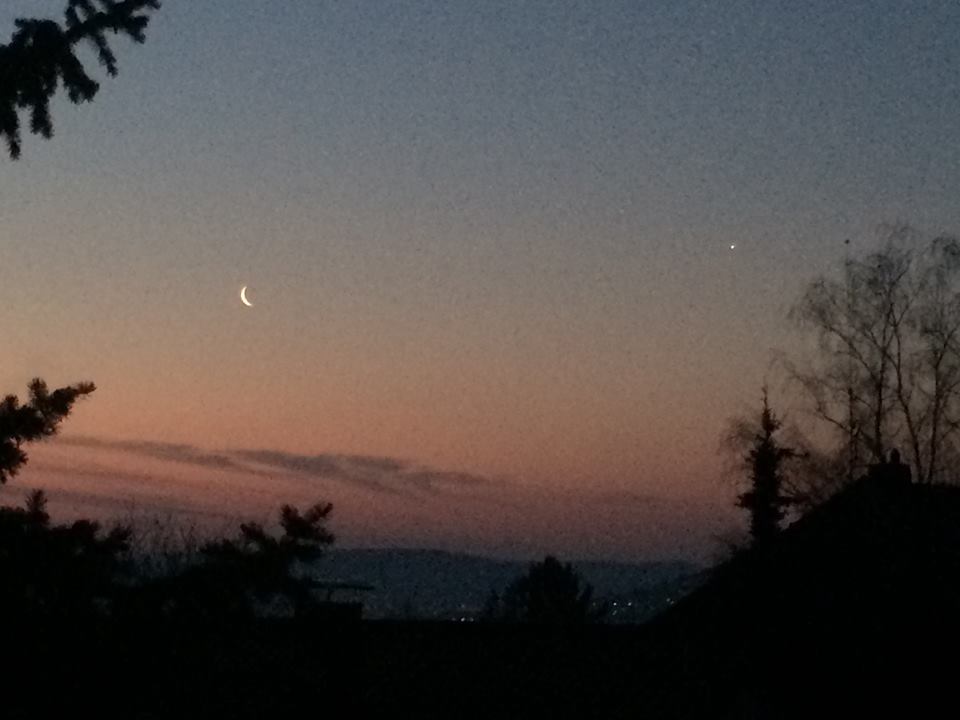
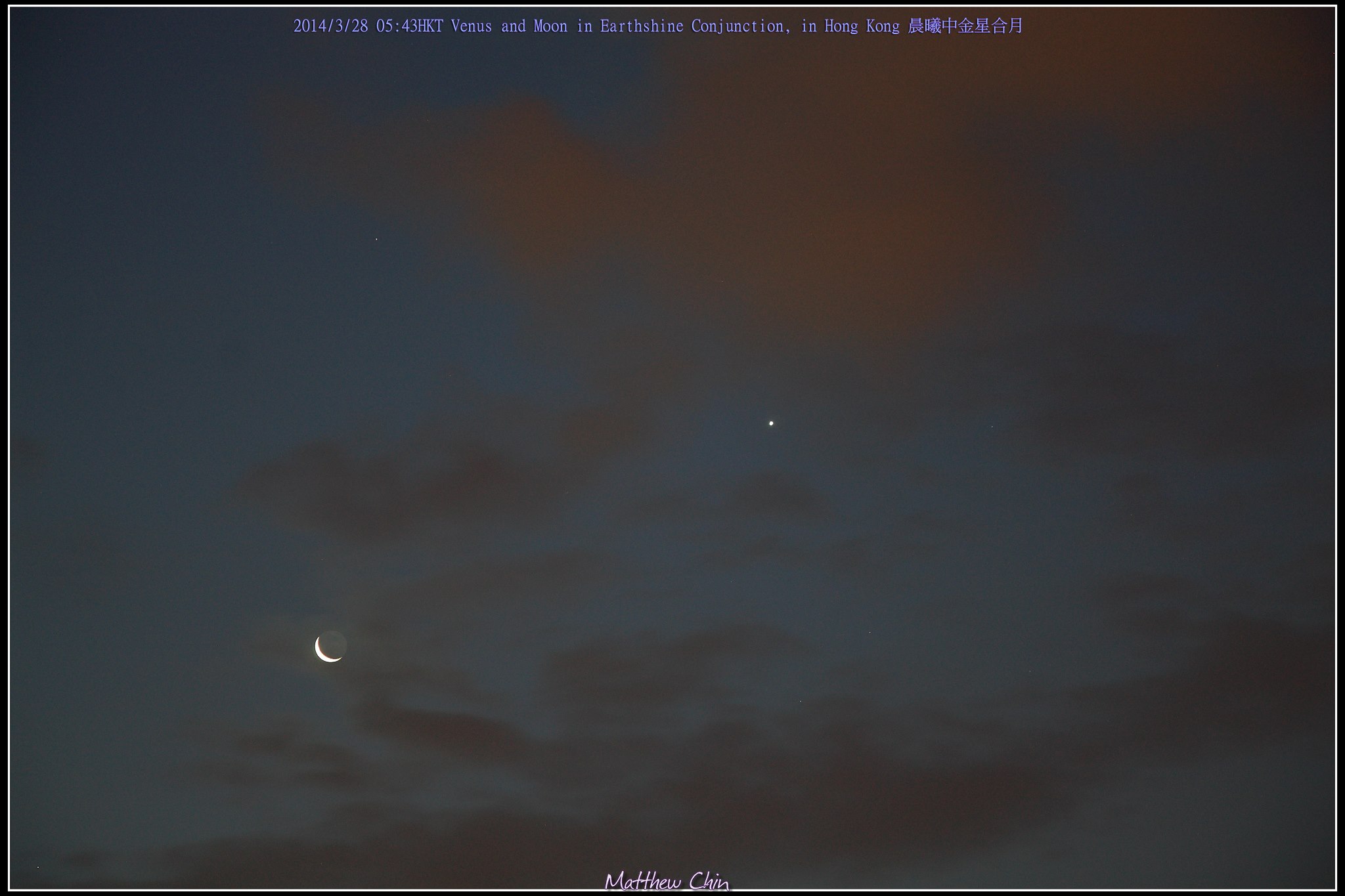
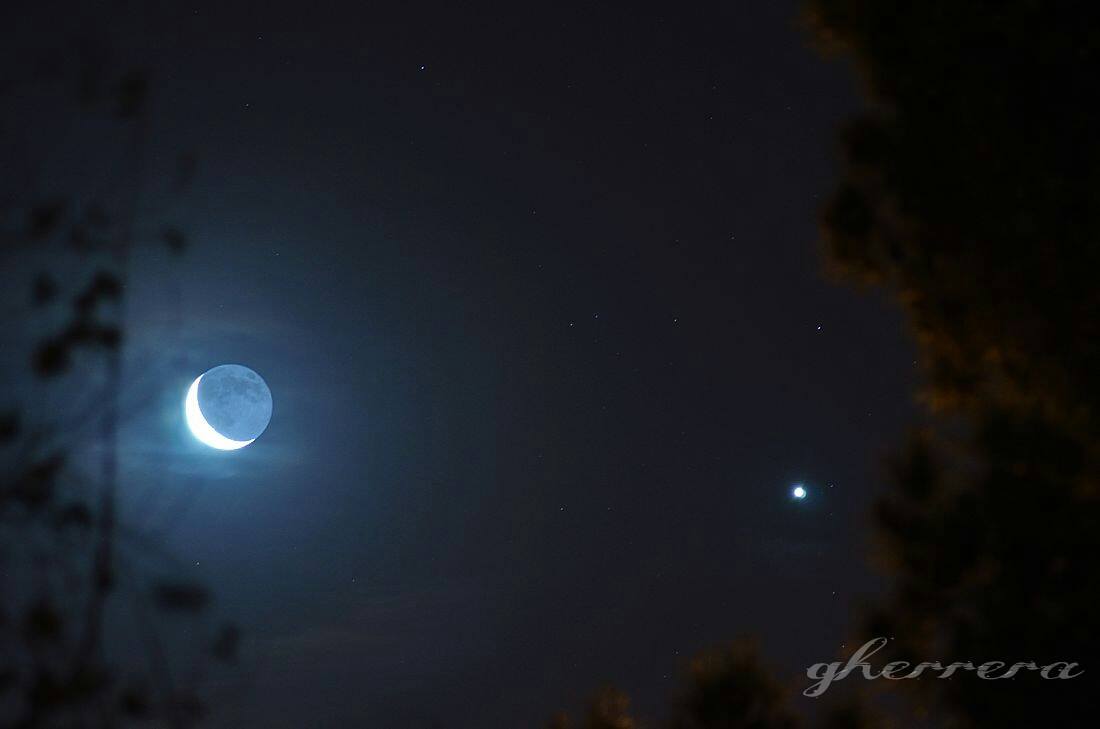
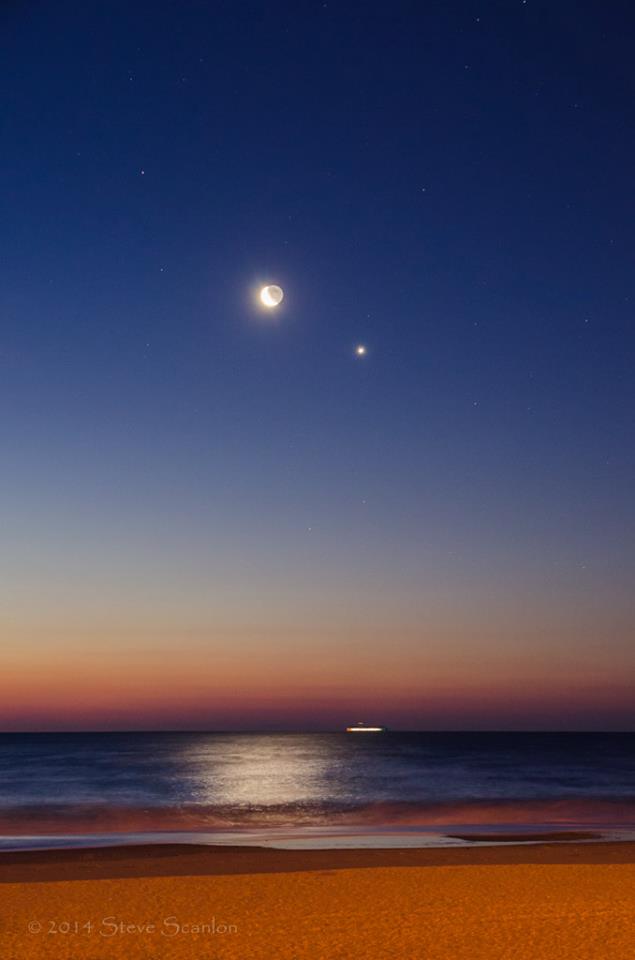
The moon and Venus, 5:30 a.m.on March 28, Germany, by Amanda DonahoMatthew Chin caught Venus and the moon on March 28 in Hong KongFrom Gaby Herrera, the moon and Venus on the morning of 3/27/14 around 5:30 a.m over El Paso TxSteve Scanlon Photograhy caught the moon and Venus from the U.S. Jersey shore, overlooking the Atlantic. More photos by Steve Scanlon.Dan Fischer caught the moon and Venus on March 27 from Konigwinter, Germany.Aniruddha Bhat caught the moon and Venus on March 27 from Maryland.Giuseppe M.R. Petricca caught the moon and Venus on March 27 from Pisa, Italy, and created this mosaic. On the far left, you can see that the phase of planet Venus is a little more than 50%. On the far right, you can see more details of the current phase of the lunar cycle.Swati Malde caught the moon and Venus on March 27 from Nairobi, Kenya.Lee Capps Photography in North Carolina captured the moon and Venus on March 27. More photos from Lee Capps.Hector Zuniga shows us where this morning’s moon and Venus appeared in front of the stars.Ken Christison caught the moon and Venus on March 27 from North Carolina.Juri Voit caught the moon and Venus on March 27 from Estonia.GregDiesel Landscape Photography captured the moon and Venus on March 27. Visit his online gallery.
Douglas Borcoman sent his greetings from Sedona, Arizona, and the video below:
Annie Lewis captured them from Madrid, Spain.Amanda Donaho captured the moon and Venus on March 27, 2014 from Germany.
Bottom line: Photos from friends around the world of the March 27, 2014 pairing of the moon with Venus. Thank you, everyone, for posting!
Deborah Byrd (asteroid 3505 Byrd) helps edit EarthSky.org and is a frequent host of EarthSky videos. Deborah created the EarthSky radio series in 1991 and founded EarthSky.org in 1994. Prior to that, she had worked for the University of Texas McDonald Observatory since 1976, and created and produced their Star Date radio series. She has won a galaxy of awards from the broadcasting and science communities, including having an asteroid named in her honor in 1990, a Public Service Award from the National Science Board in 2003, and the Education Prize from the American Astronomical Society in 2020. A science communicator and educator since 1976, Byrd believes in science as a force for good in the world and a vital tool for the 21st century. "Being an EarthSky editor is like hosting a big global party for cool nature-lovers," she says.
Like what you read? Subscribe and receive daily news delivered to your inbox.
Thank you! Your submission has been received!
Oops! Something went wrong while submitting the form.