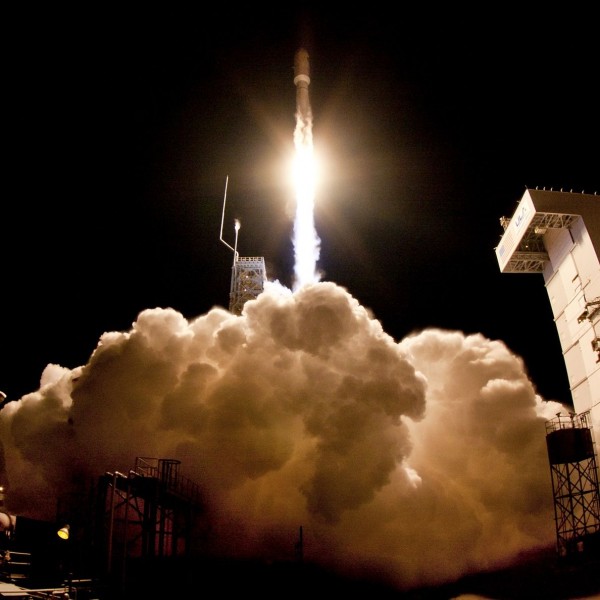
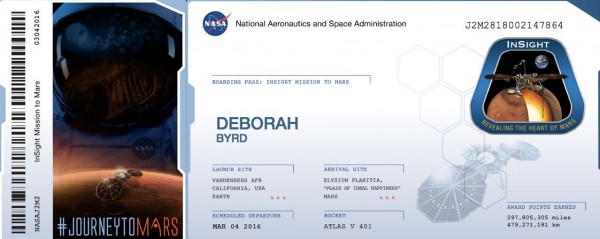
In March, 2016, NASA will launch the InSight mission to Mars: a robotic, stationary lander designed to study Mars geophysics. NASA is inviting you to ride along with the lander, or, at least, your name. The deadline for all of you Mars and space enthusiasts to add your name to a computer chip that’ll ride with the InSight lander is Tuesday – September 8, 2015 – at 11:59 p.m. EDT (Wednesday at 3:59 UTC). Translate to your time zone here.
Go here to add your name to the InSight mission: https://mars.nasa.gov/participate/send-your-name/insight/
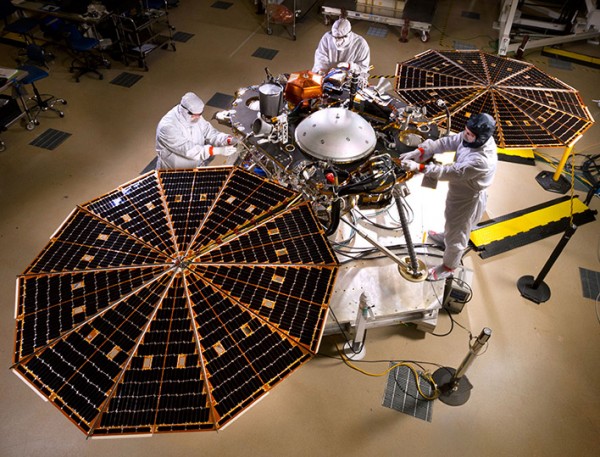
InSight is an acronym for Interior Exploration for Seismic Investigations, Geodesy, and Heat Transport. The mission will launch on an Atlas V 401 rocket from Vandenberg Air Force Base in California on March 4, 2016.
It is scheduled to land in Mars’ Elysium Planitia (Plain of Ideal Happiness) on September 20, 2016.
Once on Mars, the mission is designed to last two years.
Read more about the InSight mission to Mars
Bottom line: Tuesday – September 8, 2015 – at 11:59 p.m. EDT (Wednesday at 3:59 UTC) – is the deadline for adding your name to the upcoming InSight mission to Mars. Do it!
Like what you read?
Subscribe and receive daily news delivered to your inbox.
More from
Deborah Byrd


Visible planets and night sky guide for October

Cassiopeia the Queen is overhead on autumn evenings
What star in the northeast flashes colorfully? It’s Capella!
Proxima Centauri is the closest star to our sun