Gong Xi Fa Ca! That’s the traditional Chinese New Year greeting that means “wishing you prosperity” in Mandarin. The first day of the Chinese New Year – which begins at midnight on January 23, 2012 – is the most important of Chinese holidays, celebrated by over 1.3 billion people in China and by millions of ethnic Chinese around the world. It’s a celebration that lasts for 15 days, culminating with the Lantern Festival. Each year is associated with one of twelve animals in the Chinese zodiac. For 2012, it’s the Year of the Dragon.

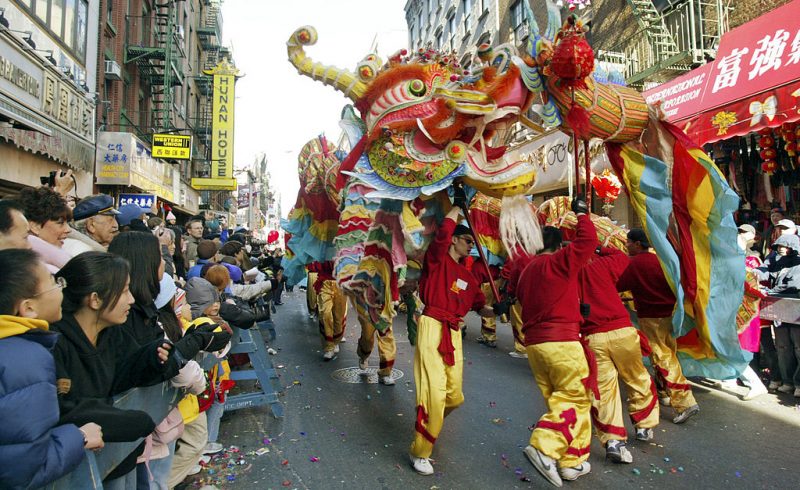
2009 Chinese New Year Parade in San Francisco featuring the traditional Chinese New Year dragon. Image credit: David Yu via Wikimedia Commons.
There are several variations on the mythology behind Chinese New Year celebrations. Most are based on a ugly bloodthirsty monster named Nian that would emerge on the last night of each year to destroy villages and eat people. A wise elder advised villagers to scare the monster away with loud noises. That night, they set fire to bamboo, lit fireworks, and banged their drums. The monster, afraid of the loud noises and lights, ran away to hide in its cave. In another version of the myth, an old man persuaded Nian to turn its wrath on other monsters, not the villagers. Before he was seen riding away on Nian, the old man, actually a god, advised the people to hang red paper decorations in their homes and set off firecrackers on the last night of the year to keep Nian away. On the first day of the new year, the villagers celebrated, greeting each other with the words “Guo Nian” which means “survive the Nian”, a tradition that has continued to this day to mean “celebrate the new year.”
In China, the familiar Gregorian calendar is used for day-to-day life. But Chinese calendar dates continue to be used to mark traditional holidays such as the new year and the fall moon festival. It’s also used astrologically to select favorable dates for weddings and other special events.

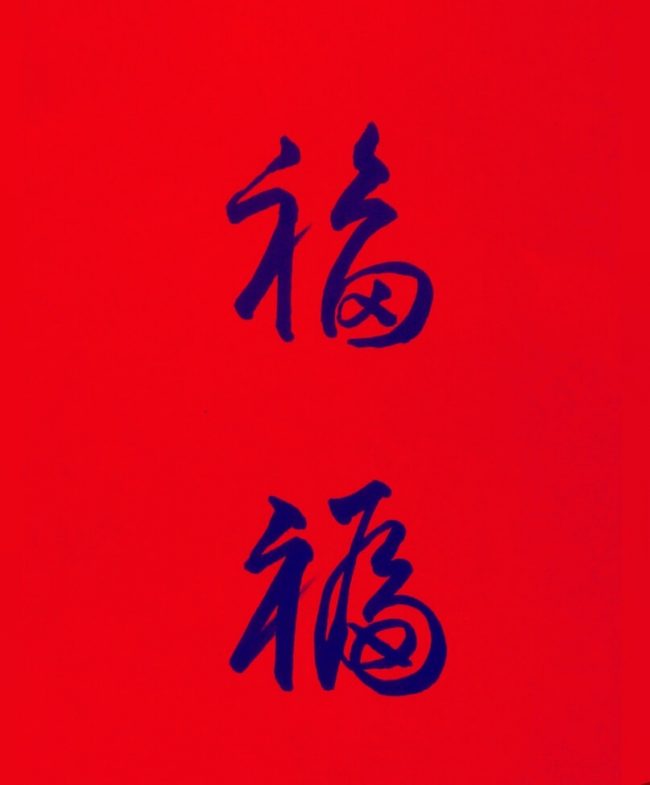
Traditional Chinese New Year Decoration. Image credit: Fanghong via Wikimedia Commons.
The Chinese calendar is a lunisolar calendar, in other words, a combination of solar and lunar calendars. It has a long history spanning several Chinese dynastic rules from as far back as the Shang Dynasty around fourteenth century B.C.. There are several different symbolic cycles within the calendar, used in Chinese astrology, that make it an intricate and complex measure of time.
A month in the Chinese calendar spans a single lunar cycle. The first day of the month begins during the new moon, when no sunlight falls on the lunar hemisphere that faces the Earth. A lunar cycle, on average, lasts 29.5 days, so a lunar month can last 29 or 30 days. Usually, there are 12 lunar months in a Chinese calendar year. In order to catch up with the solar calendar, which averages 365.25 days in a year, an extra month is added to the Chinese calendar every two or three years. As a result, Chinese New Year falls on different dates each year (in the Gregorian calendar) between January 21 and February 21.
Each year of the Chinese lunar calendar is represented by one of twelve animal symbols of the Chinese zodiac: Rat, Ox, Tiger, Rabbit, Dragon, Snake, Horse, Sheep, Monkey, Rooster, Dog, and Boar. For 2012, it’s the dragon’s turn. According to Chinese astrology, people born on the year of the dragon are said to be strong, self-assured, eccentric, intellectual, and passionate, among other things.

Traditional Chinese Dragon used in the dragon dance. Image credit: Caseman via Wikimedia Commons.
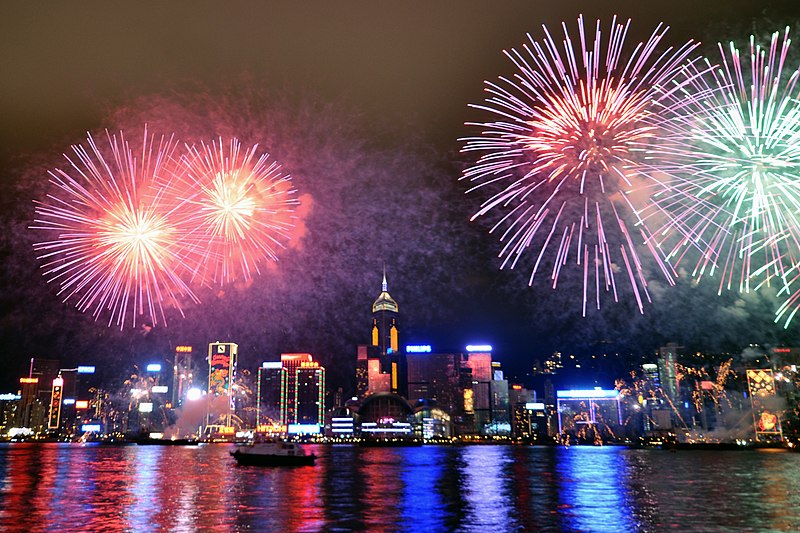
Chinese New Year celebrations traditionally lasts 15 days, from the first day (during a new moon) to the 15th day (a full moon). Each day holds a special significance that varies according to local traditions. But first, before the arrival of the new year, homes are thoroughly cleaned to sweep away ill fortune, and to welcome good luck. On new year’s eve, there are family gatherings to celebrate and enjoy sumptuous traditional feasts, and to greet the new year with fireworks at midnight.

Chinese New Year fireworks in Hong Kong. Image credit: Kroot via Wikimedia Commons.
In the days that follow, festive dance parades are held featuring colorful dragons or lions, ceremonies are held to pay homage to deities and ancestors, children receive money in red envelopes, gifts are exchanged, extended family members visit each other, and there’s more traditional feasting.

Chinese New Year red envelopes, used for giving money to children, at Dihua Market, Taipei, Taiwan. Image credit: BCody80 via Wikimedia Commons.
The celebration culminates on the 15th day with the Lantern festival; on this night of the full moon, families mingle in the streets carrying lighted lanterns, often creating a beautiful light display.
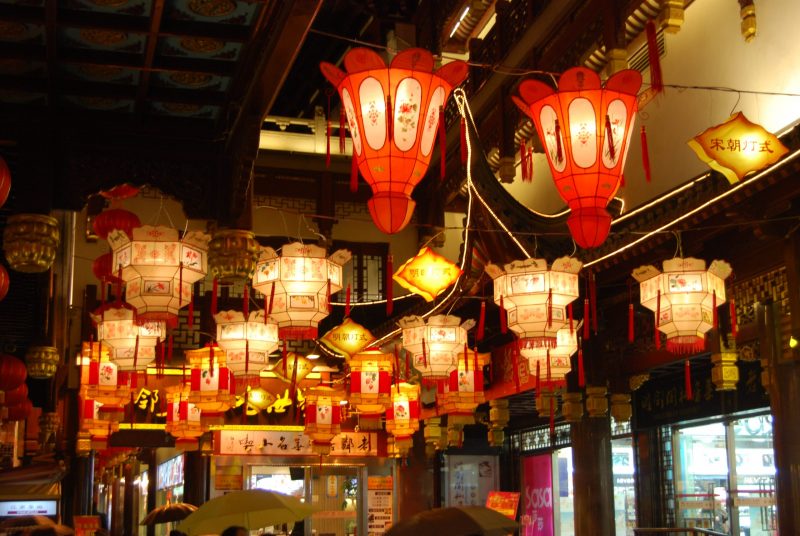
Lantern Festival night in front of the Chiang Kai-shek Memorial Hall in Taipei, Taiwan. Image credit: Philo Vivero via Wikimedia Commons.
Bottom line: The Chinese New Year for 2012 will be celebrated on 23 January. It’s the most important of Chinese holidays, celebrated by billions of people across the world. Festivities traditionally last for 15 days to culminate with the Lantern Festival. This calendar is based on a complex lunisolar calendar system that uses both lunar and solar cycles to mark time. As a result, Chinese New Year falls on different dates each year, between January 21 and February 21 of the conventional Gregorian calendar. Each Chinese lunar year is associated with one of twelve animals in the Chinese zodiac. For 2012, it’s the Year of the Dragon.
Autumn equinox, cycles of nature and Chinese philosophy
Celebrate the summer solstice as the Chinese philosophers did


Happy New Year!!
[...] read more on the history of Chinese New Year go to: http://earthsky.org/human-world/chinese-new-year-2012-rings-in-year-of-the-dragon Advertisement GA_googleAddAttr("AdOpt", "1"); GA_googleAddAttr("Origin", "other"); [...]
Haooy New Year to all my Oriental friends.
Peace and love.
I am 4 years old & fom China but live in Louisiana now. Dragons are my favorite!!! Happy New Year!!!! To all!!!
Happy Chineses New Year to everyone!
Chinese New Year only signifies the first new moon of the first month. However, it does not necessarily mean the beginning of the Chinese Zodiac Calendar. The cut off point should be around Feb. 4 each year. So the year of the Dragon does not officially start until Feb. 4th. All the children born before Feb. 4th, 2012 still have the Chinese Zodiac sign of Rabbit and not Dragon.
However THIS Lunar Chinese (DRAGON) New Year sctually started on January 23rd of 2012. Thousands of Chinese have already celebrated & rang in the new year of the Dragon on the 23rd. I don’t think that many Chinese in China be wrong about the date.
It may seem incredulous but it is true! The celebration of Chinese New Year is not exactly aligned with the zodiac calendar. It is not that over 1 billion people are wrong. They are celebrating the beginning of a whole year that will be year of the dragon. It is just that the beginning of dragon year will be 4 Feb, and not yet on the 23rd of Jan. 23rd Jan is the 1st day of the :Lunar calendar. It’s quite confusing but true :)
[...] Gong Xi Fa Ca! That’s the traditional Chinese New Year greeting that means “wishing you prosperity” in Mandarin. The first day of the Chinese New Year – which begins at midnight on January 23, 2012 – is the most important of Chinese holidays, celebrated by billions in China, and by millions of ethnic Chinese around the world. It’s a celebration that lasts for 15 days, culminating with the Lantern Festival. Each year is associated with one of twelve animals in the Chinese zodiac. For 2012, it’s the Year of the Dragon. source. [...]
HAPPY NEW YEAR Gong Xi Fa Ca!
[...] of a new year? “According to Chinese astrology, people born on the year of the dragon are said to be strong, self-assured, eccentric, intellectual, and passionate, among other [...]
[...] is Chinese New Year’s Eve, heralding the Year of the Dragon, a celebration that lasts for 15 days. If you’d like to cook [...]
[...] Trend #3 - Chinese New Year 2012 rings in the Year of the Dragon | Human World | EarthSky -http://earthsky.org/human-world/chinese-new-year-2012-rings-in-year-of-the-dragon [...]
C’mon, get it right! It’s not just the Chinese who celebrate Lunar New Year, but ALL of East Asia and many parts of the rest of the continent including Viet Nam. And they all have traditions that celebrate this holiday.
How do they say Happy New Year in Vietamese? Just curious. & do the Japanese celebrate it too?
Happy Year of the Dragon everyone! I was born in the year of the rabbit. Check out cool images of Chinese zodiac creatures
http://blog.arkive.org/2012/01/celebrate-new-year-with-arkive%E2%80%99s-chinese-zodiac/
[...] Read more at Earth Sky. [...]
@Claire,
other ethnic groups may have adopted the lunisolar calendar and hold celebrations unique to their cultures, but this blog is specifically about how it’s celebrated by ethnic Chinese in China and around the world. BTW, I was born and raised in Malaysia, so i’m at least aware of how it’s celebrated in Malaysia and Singapore.
[...] at midnight, the Chinese New Year begins. It’s the year of the dragon and Bergdorf Goodman’s windows are ringing it in [...]
[...] Here’s a good read about Chinese New Year http://earthsky.org/human-world/chinese-new-year-2012-rings-in-year-of-the-dragon [...]
[...] about Japanese and Chinese dragon myths and folklore. If you want to find out more I like this site. Share this:MoreDiggEmailLike this:LikeBe the first to like this post. ▶ No Responses /* [...]
[...] about Japanese and Chinese dragon myths and folklore. If you want to find out more I like this site also. Share this:MoreDiggEmailLike this:LikeBe the first to like this post. ▶ No Responses [...]
[...] Chinese New Year 2012 rings in Year of the Dragon [...]
[...] Learn more about the Chinese New Year HERE. [...]
“celebrated by billions in China”…. really? Last I heard there was only around 1.3 billion in China!
Sloppy article which makes me wonder what else is made up?
Thank you for the correction regarding population.
[...] It’s Chinese New Year, the Year of the (Water) Dragon. From the Malaysia Star… The active Dragon ushers in an energetic year characterised by movements and changes, and reforms in the political and social spheres, predicts renowned Hong Kong feng shui master Raymond Lo. [...]
Happy Chinese New Year!
The year of the dragon is suppose to look pretty good for me so I’m excited for 2012 :) Will definitely be starting out the new year on a good note by trying out this ginger fried rice recipe > http://www.skinnyscoop.com/list/bakedbyjoanna/chinese-new-year
It looks SO good!
happy chinese new year :)
happy new year, hpe this new year is a blessed one
Gong Xi Fa Ca! Happy New Year to all chinese people! Dragon year means much to me because I was born in a Dragon year, so I enjoy it very much. Without knowing that today was the chinese New Year, I was full of joy and energy so I walked long to reach the chinese store in my town and instinctively I did lot of shopping, all chinese items, and I didn’t know that I was about to offer myself some gifts for the new year, from gym balls to bath glove and bath shoes and some pillows all made in china. Anyway I spent a great day and didn’t know that I was celebrating the chinese New year. Thank you all my chinese friends who work hard to produce and to make such a good market full of chinese items. Really Great Job! Well done to you all !
[...] http://earthsky.org/human-world/chinese-new-year-2012-rings-in-year-of-the-dragon [...]
[...] http://earthsky.org/human-world/chinese-new-year-2012-rings-in-year-of-the-dragon [...]
[...] New Year! Today, communities celebrating Chinese New Year are welcoming the Year of the Dragon. Next Media Animation explains how the Chinese New Year celebration came to be celebrated with [...]
[...] to Shireen Gonzaga on the EarthSky blog, The Chinese calendar is a lunisolar calendar, in other words, a combination [...]
cool
Just found out my son & daughter in law are expecting a little one around September! Hopfully (SHE) will be a Virgo/Dragon like ME!
[...] out more Share this:TwitterFacebookLike this:LikeBe the first to like this [...]
[...] out more about Chinese New Year on our website Share this:TwitterFacebookLike this:LikeBe the first to like this [...]