Prehistoric insects were giant bugs
When you complain about dead bugs on your windshield, be thankful that insects today are considerably smaller than their prehistoric ancestors.
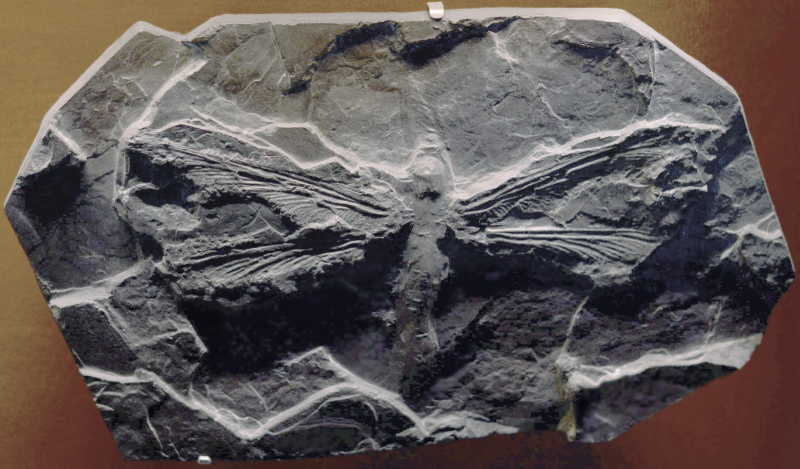
Hundreds of millions of years ago, giant insects were common on Earth. Consider Meganeura, a genus of extinct insects from approximately 300 million years ago. They were related to modern-day dragonflies. One member of this group – M. permiana – was first described by researchers in Kansas in 1937 as having a wingspan of over 2 feet (0.6 meters). It’s still considered one of the largest known insects that ever lived.
While over a million insect species live today, truly giant insects no longer exist. Why did they disappear?
Why did prehistoric insects disappear?
There are two main reasons. The most important is that our atmosphere has changed. Millions of years ago, the air surrounding our planet was warmer, moister and contained more oxygen. During the Carboniferous and Permian periods, Earth’s air contained 31-35% oxygen. Today, there is just 21% oxygen in the air.
Oxygen levels are especially important for insects because they don’t have lungs. Instead, they rely on air flowing through a series of openings on their bodies called spiracles, which connect via tiny tubes to the tissues that need oxygen.
Dinosaurs helped clean out the giant bugs
But there’s another reason giant insects disappeared. As ancient dinosaurs evolved the ability to fly, eventually becoming modern birds, they put a cap on insect size through predation and competition.
The earliest known bird – Archaeopteryx – appeared about 150 million years ago. Birds proved to be faster and more agile than the giant insects. In an article in LiveScience, paleobiologist Matthew Clapham of UC Santa Cruz commented:
The change in insect size is gradual. This gradual change fits quite nicely with the gradual evolution in birds at the time.
Bottom line: Hundreds of millions of years ago, giant insects were common on Earth. The decline in atmospheric oxygen and the rise of birds contributed to their demise.
Light pollution causes insects to lose track of the sky
Read more: Dragonflies are all-terrain insects: Lifeform of the week
Read more: Queen ants found giving birth to 2 different species
Like what you read?
Subscribe and receive daily news delivered to your inbox.
More from
EarthSky Voices


Why leaves change color in the autumn

How a helium leak in an exoplanet atmosphere hints at life
Would a Yellowstone supervolcano eruption end humanity now?
Neptune discovered on this date 180 years ago