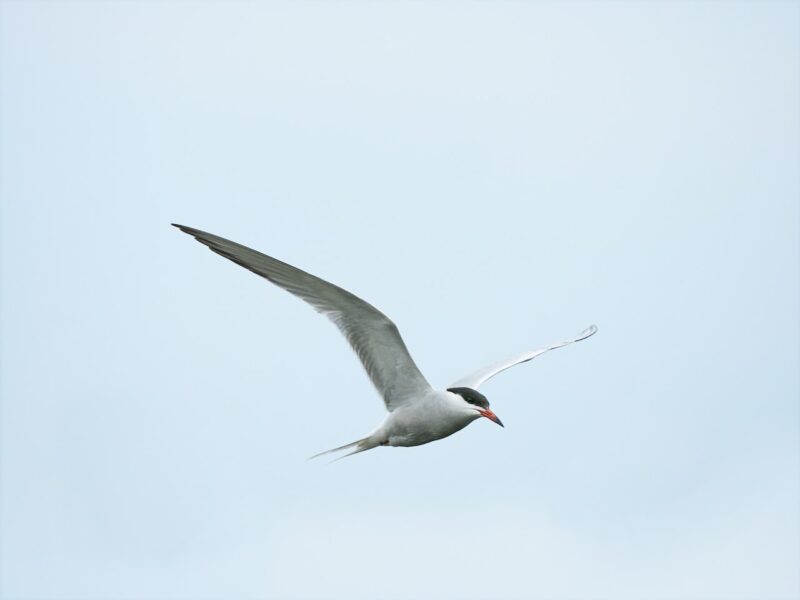
The bird that flies farthest is the Arctic Tern, an elegant white seabird. This bird also sees more daylight than any other.
The Arctic Tern breeds on the shores of the Arctic Ocean in northern hemisphere summer. And it feeds over the oceans of the southern hemisphere half a year later – in southern hemisphere summer. So, like many birds, this bird flies great distances every year to maintain its life of endless summertime.
North American Arctic Terns fly about 40,000 kilometers – or 24,000 miles – each year. That’s a distance about equal to the distance around the Earth.
An Arctic Tern can live for 25 years, so in its life-long quest for summer it can fly a million kilometers – nearly three times the distance from the Earth to the moon.
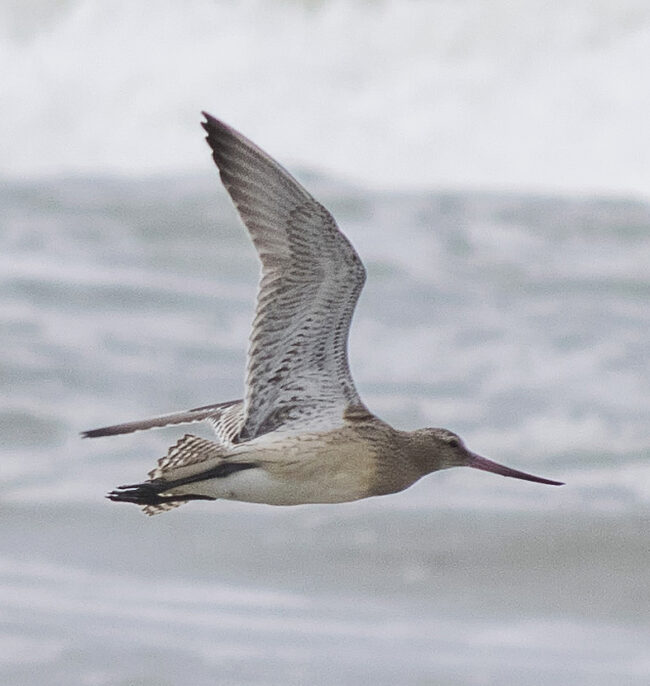
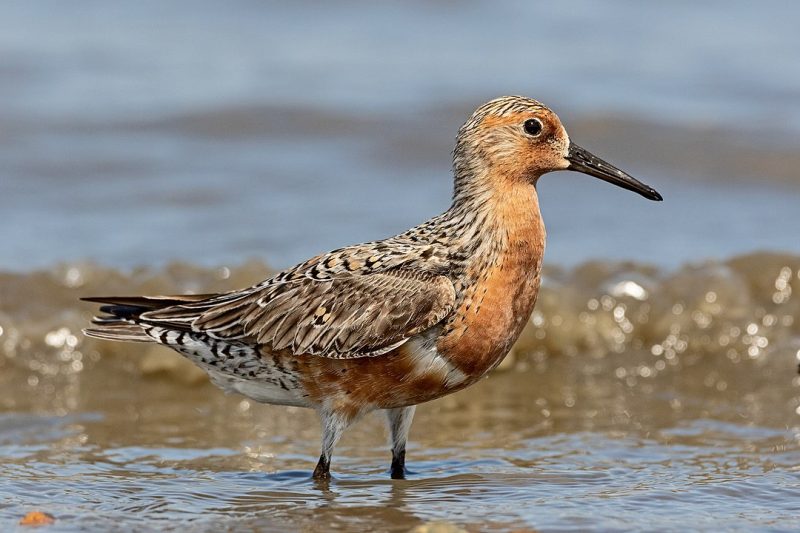
By the way, there are about 120 migratory bird species with populations in the United States and south of the equator. Most of these species cross the equator during migration. For example, the Red Knot flies from New England to far southern South America.
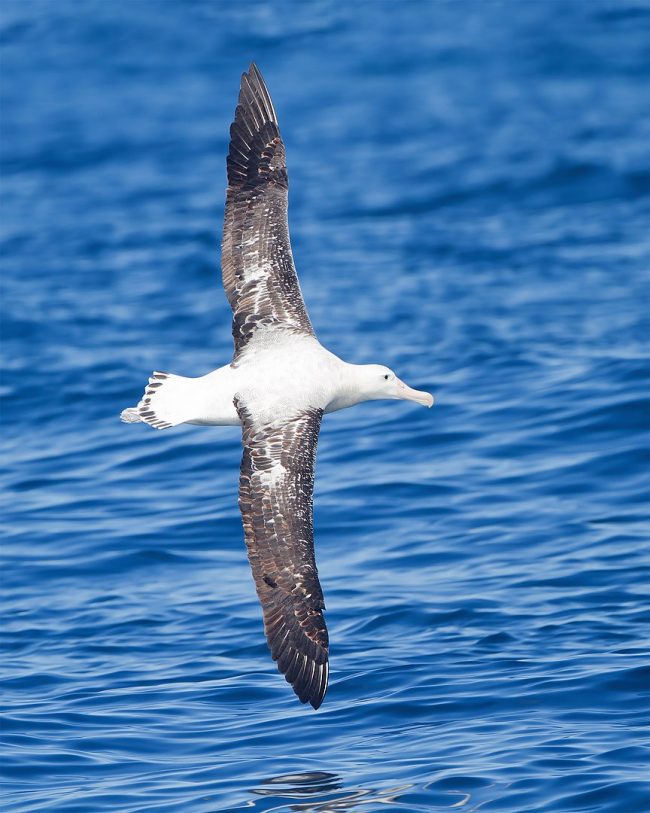
Other birds stay in one hemisphere, but go farther. For example, the Wandering Albatross spends most of its life aloft, circling the world over the oceans of the southern hemisphere. It stops only to breed on storm-swept islands near Antarctica.
A Wandering Albatross might fly 30,000 kilometers – that’s 18,000 miles – between breedings.
So while the Arctic Tern flies farthest of all birds, there are other bird species that come in a close second!


“But the farthest flier is the Arctic Tern, an elegant white seabird. It breeds on the shores of the Arctic Ocean in Northern Hemisphere summer. And it feeds over the Southern Oceans half a year later – in Southern Hemisphere summer. North American Arctic Terns fly about 40,000 kilometers, or 24,000 miles, each year ”
Question : It seems all the migrating birds I have read about breed in the Northern Hemisphere and feed in the Southern Hemisphere. Are there any birds that go the other way around, breed in the Southern Hemisphere and feed in the Northern Hemisphere. If not, why not?
Kenneth, very interesting question. On thinking about it, at first I wondered if there might be some magnetic effect at play here … maybe birds breed in the north for a reason having to do with Earth’s magnetic polarity.
Then I thought about the fact that there’s simply a lot more land in the northern hemisphere than the southern hemisphere. So I thought … maybe there are just more bird species originating in the northern hemisphere.
I’m not a bird expert, as you can see here.
And now I think both of my original thoughts were not the main reason that migrating birds tend to breed in the northern hemisphere and feed in the southern.
Instead, it could be that northern hemisphere birds tend to be the ones that migrate long distances. Southern hemisphere birds are more sedentary. Of course, there are exceptions. I found some good information in Wikipedia about bird migration that seems to answer your question. You’ll find the relevant secton toward the bottom of this page about bird migration, under the heading Australasia. This paragraph seemed relevant to me:
“Relatively few Australasian birds migrate in the way that so many European and North American species do. This is largely a matter of geography: the Australasian climate has seasonal extremes no less compelling than those of Europe; however, they are far less predictable and tend to take place over periods both shorter and longer. A couple of weeks of heavy rain in one part or another of the usually dry centre of Australia, for example, produces dramatic plant and invertebrate growth, attracting birds from all directions. This can happen at any time of year, summer or winter and, in any given area, may not happen again for a decade or more … ”
Check out that page. There’s lots more there. I love Wikipedia for its great information.
Thanks for visiting Earth & Sky, Kenneth! Interesting question and answer …
Deborah
According to the National Geographic Bird Migration Map for the Western Hemisphere—the Artic Tern migrates to Antartica for its warm season (our winter, I presume) and returns to the Artic for our summer. It’s total migration is further than the circumference of this planet.
Here, it’s climate—not magnetism—driving the Artic Tern’s behavior. Still, from artic to artic sounds weird (why not stay put?)
Grace
Who is the author?
Several years ago, Dow Chemical in Lake, Jackson, Texas found a flock of Terns on it’s main parking lot for the office building. Immediately, someone decided to close the parking lot gate and make the administration park at a further parking lot. The person who had arrived first recognized the bird and knew they migrated through this part of Texas and had stopped to rest and feed. After a few days they took off like a fog and were gone. Thanks to the guy/gal who knew enough and acted quilkly enough to support this beautiful animal.
This is fascinating!
hmmmm interesting, these days the bio exploration is on the go like few time ago the world’s smallest chameleon was introduced