



The concern about the disappearance of monarch butterflies has intensified. In the northern spring of 2013, conservation organizations reported that the amount of Mexican forest the butterflies occupied was at its lowest in 20 years. The World Wildlife Fund, in partnership with a Mexican wireless company and Mexico’s National Commission of Protected Areas, found nine hibernating colonies occupied almost 3 acres during the 2012-13 winter, a 59% decrease from the previous winter. Illegal logging in the Mexican forests, where the butterflies spend the winter, is being blamed for the shrinking acreage. Climate change is also thought to contributing to the butterfly population crash; it is causing the disappearance of milkweed, the only plant on which monarchs lay their eggs and on which their caterpillars feed. Monarch butterfly populations are known and loved for their beauty and long-distance migrations. Follow the links below to learn more about monarch butterflies.
An August 22, 2013 article in USAToday discusses ongoing fears that the monarch butterfly population may be crashing. The information above came from USAToday’s article.
Some people are trying to save the monarchs, by planting habitats for them.
Monarch Watch is a citizen group concerned about the butterflies.
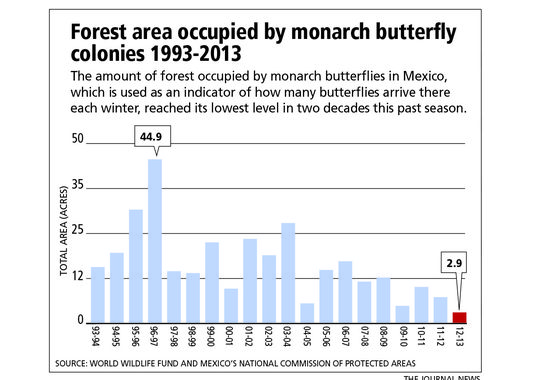
Bottom line: Monarch butterfly habitat in Mexican forests is at a 20-year low, due, it’s thought, to illegal logging. Climate change may also be contributing to the butterflies’ demise.
Like what you read?
Subscribe and receive daily news delivered to your inbox.
More from
Deborah Byrd


The Day the Earth Smiled: July 19, 2013

The 1st footsteps on the moon: Celebrate with Moon Day
Find Polaris and Thuban via the Big Dipper in July
See 3 small constellations near the Summer Triangle


