Mattituck, NY
10:10 pm
William Optics GT-71 Triplet refractor
Canon 200mm lens
ZWO ASI 294MM camera
SkyWatcher EQ6R-Pro camera
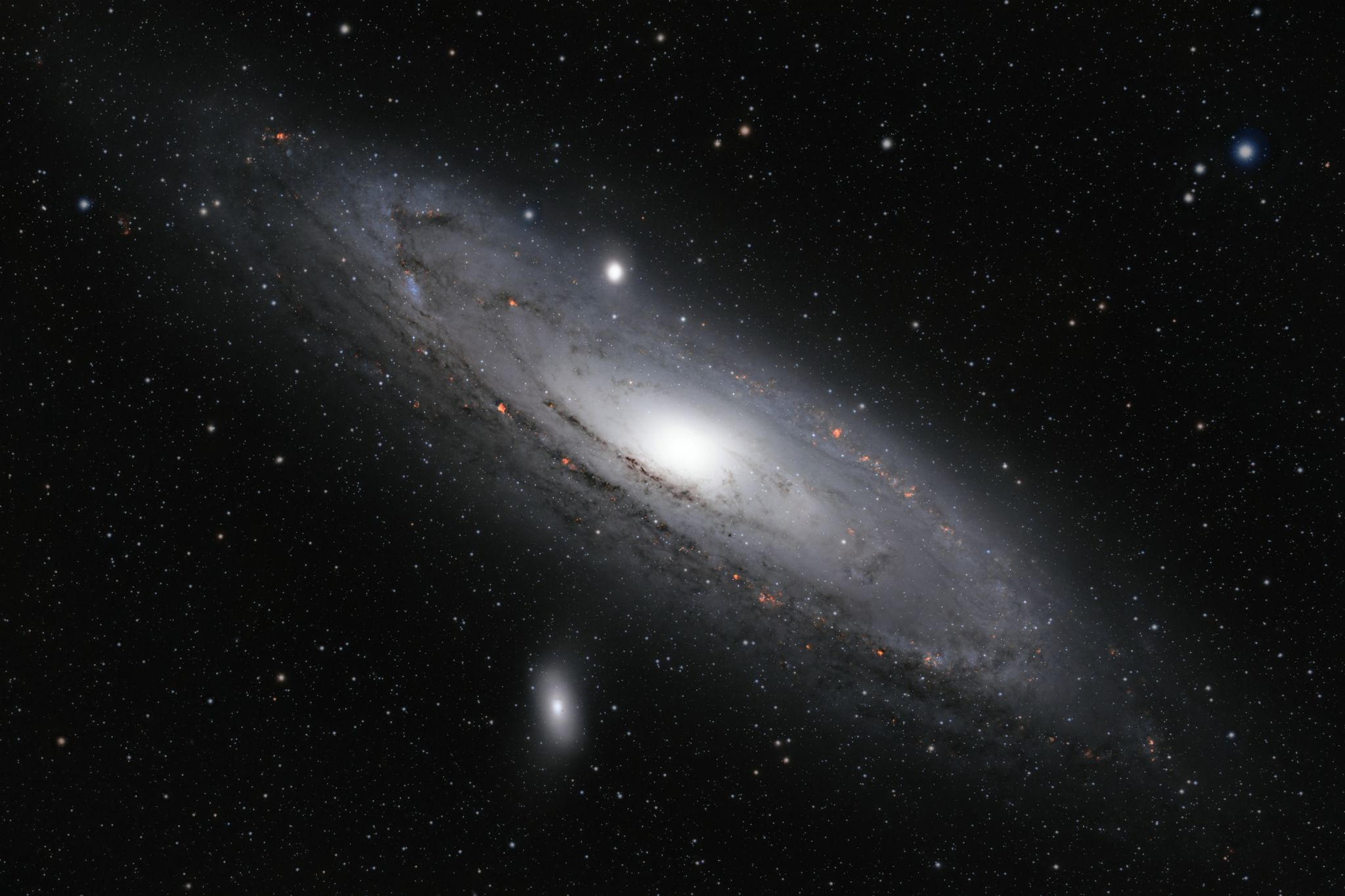
2 years of data on M31, put together, for a total of 57 hours. Over 48 hours is Ha-OIII, data, of which 38 hours is OIII, from capturing StDrSA-01 in November 2023
With all the bad weather lately, I decided to take my last 2 years of data on M31, the Andromeda Galaxy, and put it all together, for a total of 57 hours. Over 48 hours is Ha-OIII, data, of which 38 hours is OIII, from capturing StDrSA-01 in November 2023
The star-forming regions appear as small red "knots" in and beyond the spiral arms, and the collections of young, hot blue stars appear as blue regions, including NGC 206, which is a star cluster within the galaxy.
The Andromeda Galaxy is a barred spiral galaxy and is the nearest major galaxy to the Milky Way and is approximately 2.5 million light-years from Earth.
Like what you read?
Subscribe and receive daily news delivered to your inbox.
More from
David Callejas


Sometimes Island on Lake Travis
Sunset on Lake Travis
Ready, set, explore Earth from home
Two planets destined to die as their star expands