



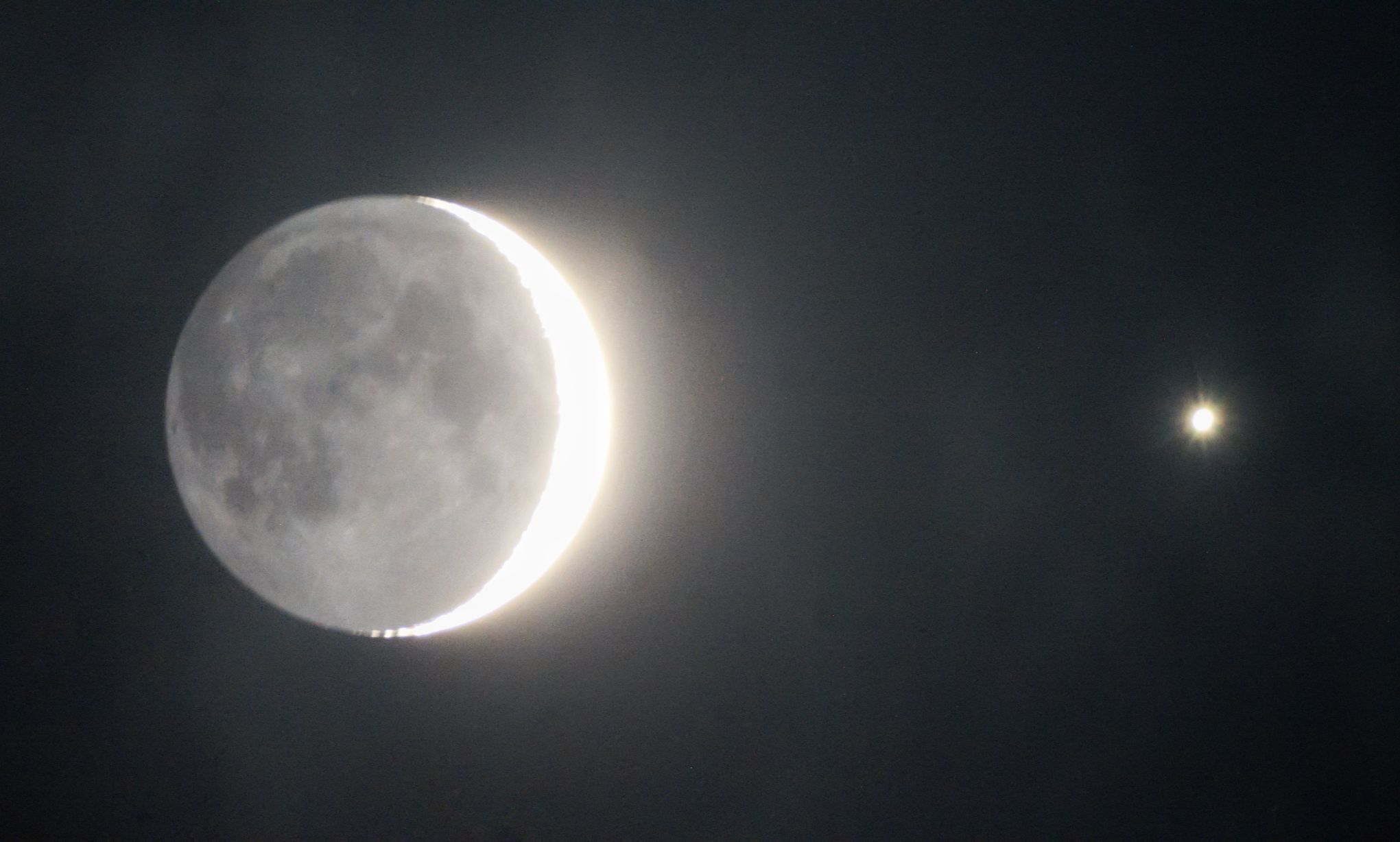
Lahore, Punjab, Pakistan
06:30 pm
Celestron 70mm Refractor
Canon 1100D DSLR at prime focus
Edited in GIMP, Snapseed and Lightroom to fix saturation, brightness, curves, highlights and contrast.
As night fell across Lahore, Pakistan, on the evening of March 24th, we were treated with another one of many spectacular and awe-inspiring spectacles that conjunctions bring with them. In this case, Venus led the Moon low into the western horizon, both of them glimmering through the parting clouds from recent rain, until they set.
What you see here is the crescent Moon, lit up on one side by sunlight, and on the other side by 'earthshine,' which is the reflection of dwindling sunlight off the earth to the moon, off the moon and back to the earth. Hence, you're able to see the night side of the lunar surface. About 40 million kilometers further, Venus is but a speck of light, shining brilliantly as the brightest planet in our solar system.
Though conjunctions hold no scientific value or opportunity as such, they're some of the most spectacular events by far. They allow many to go back to why they started looking up at the sky in the first place - simply because it is beautiful.
Like what you read?
Subscribe and receive daily news delivered to your inbox.
More from
David Callejas


Sometimes Island on Lake Travis
Sunset on Lake Travis
Ready, set, explore Earth from home
Two planets destined to die as their star expands



