



Alkut.Iraq
09:00 pm
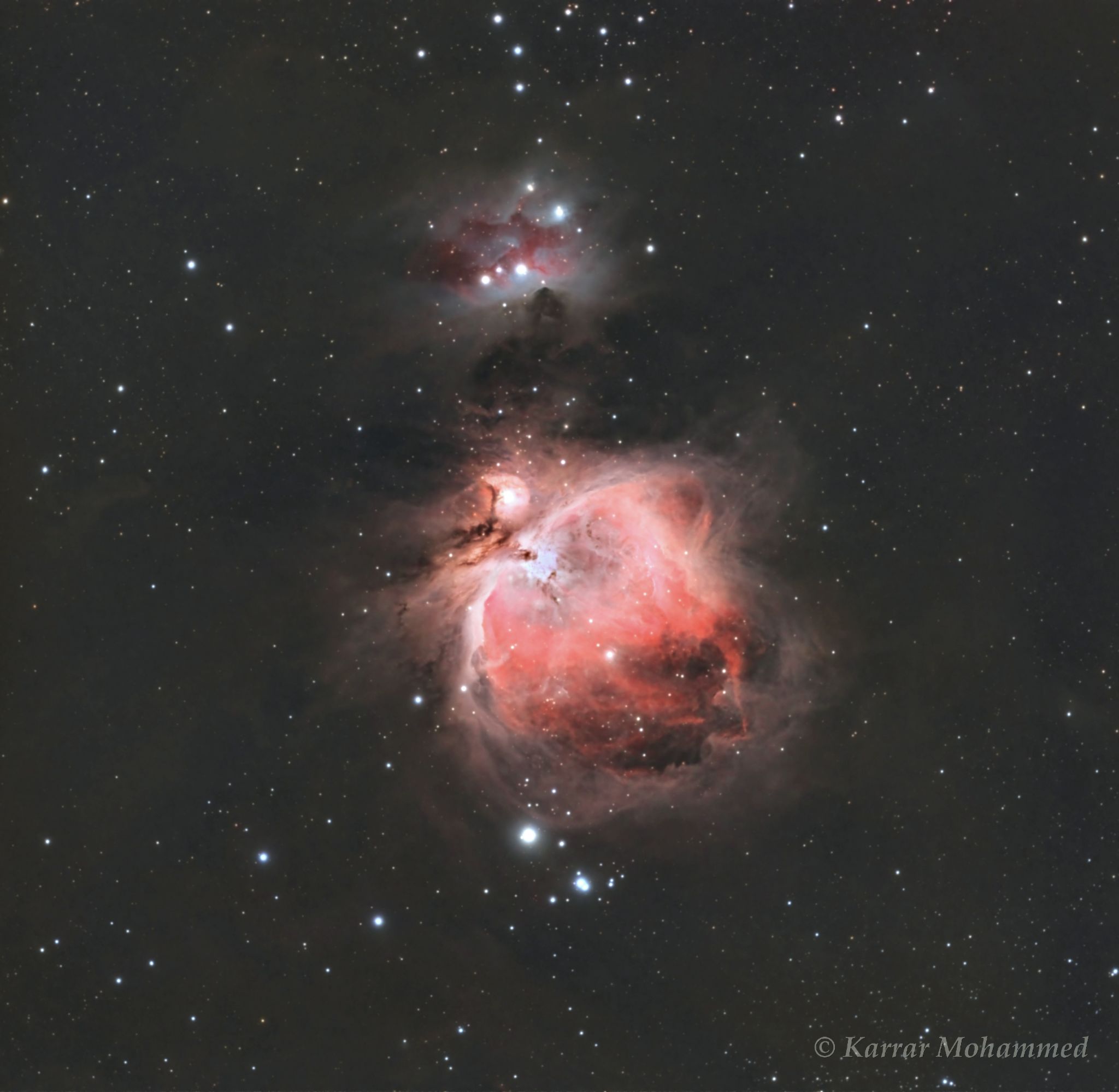
Sharpstar 94EDPH Triplet Apo with 0.8x Focal Reducer F4.4 Full Frame
Eq6 r pro
ASI 2600 MM PRO
ZWO 290MM Camera+Qhy Mini Guide Scope
ASIair Plus
ZWO EAF Focuser
ZWO EFW Electronic Filter Wheel 7x36"
Antlia V-Pro Blue 36 mm: 20×120″(40′) ISO100 0°C bin 1×1
Antlia V-Pro Green 36 mm: 20×120″(40′) ISO100 0°C bin 1×1
Antlia V-Pro Red 36 mm: 20×120″(40′) ISO100 0°C bin 1×1
Total integration 2h
Bortle sky 8
Stack: Astro pixel processor
Pixinsight
https://www.astrobin.com/9mm7r3
The Orion Nebula (also known as Messier 42, M42, or NGC 1976) is a diffuse nebula situated in the Milky Way, being south of Orion's Belt in the constellation of Orion. It is one of the brightest nebulae and is visible to the naked eye in the night sky with apparent magnitude 4.0. It is 1,344 ± 20 light-years (412.1 ± 6.1 pc) away[3][6] and is the closest region of massive star formation to Earth. The M42 nebula is estimated to be 24 light-years across (so its apparent size from Earth is approximately 1 degree). It has a mass of about 2,000 times that of the Sun. Older texts frequently refer to the Orion Nebula as the Great Nebula in Orion or the Great Orion Nebula.
Like what you read?
Subscribe and receive daily news delivered to your inbox.
More from
David Callejas


Sometimes Island on Lake Travis
Sunset on Lake Travis
Ready, set, explore Earth from home
Two planets destined to die as their star expands



