NASA, not one for superlatives, says that the March 29, 2014 X-flare on the sun inspired the most detailed observations of a solar X-flare in history. Four solar observatories in space, and one on the ground, captured rich data that will help researchers better understand what triggers flares.
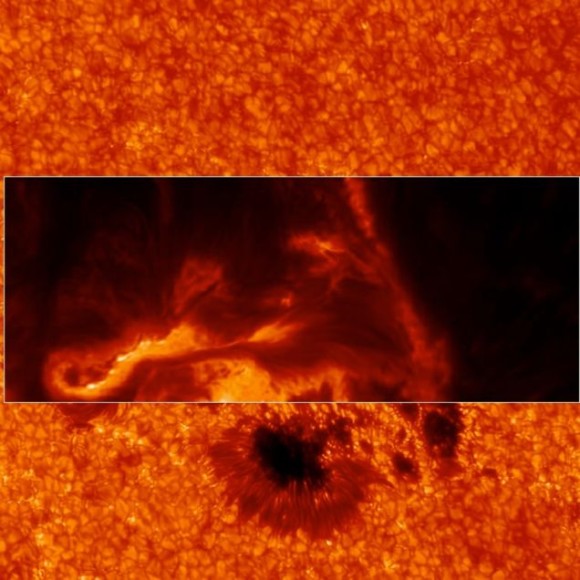
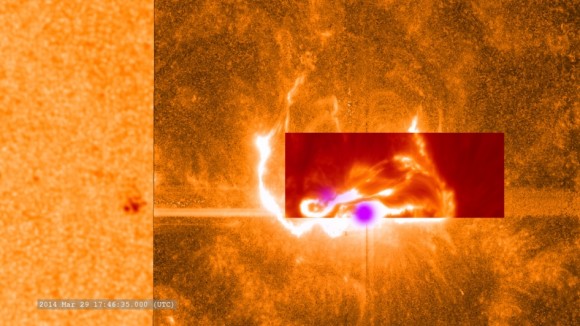
The observatories that observed the March 29 solar flare include:
- NASA’s Interface Region Imaging Spectrograph, or IRIS
- NASA’s Solar Dynamics Observatory, or SDO
- NASA’s Reuven Ramaty High Energy Solar Spectroscopic Imager, or RHESSI
- The Japanese Aerospace Exploration Agency’s Hinode
- The National Solar Observatory’s Dunn Solar Telescope located at Sacramento Peak in New Mexico.
Bottom line: NASA says the March 29, 2014 X-flare was the best observed X-flare in history. This post contains some beautiful images of the flare.
Like what you read?
Subscribe and receive daily news delivered to your inbox.
Thank you! Your submission has been received!
Oops! Something went wrong while submitting the form.
More from
Editors of EarthSky
View All


Comet Halley is parent of 2 meteor showers

October 18, 2026
Inferior conjunction — Venus! October 23-24, 2026
October 17, 2026
Mercury after sunset and great for Southern Hemisphere!
October 9, 2026
Meteor shower guide 2026: Up next … the Orionids
October 9, 2026