A daily update by email. Science news, great photos, sky alerts.
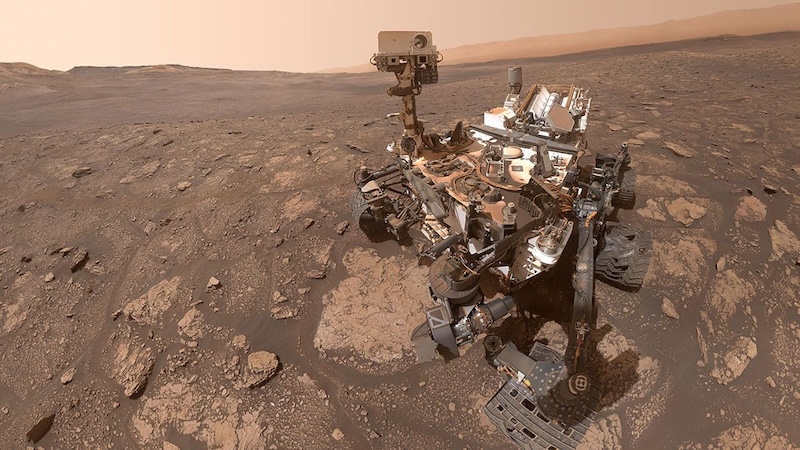
NASA's Curiosity rover has found yet more evidence for an ancient lake on Mars. Metallic minerals in preserved rock ripples provide the clues.
NASA's Curiosity rover has identified the most diverse collection of organics on Mars ever found. They include some organics never seen before.
The summer solstice in Mars' southern hemisphere happens on April 25, 2026. Summertime there typically kicks off dust season on the red planet.
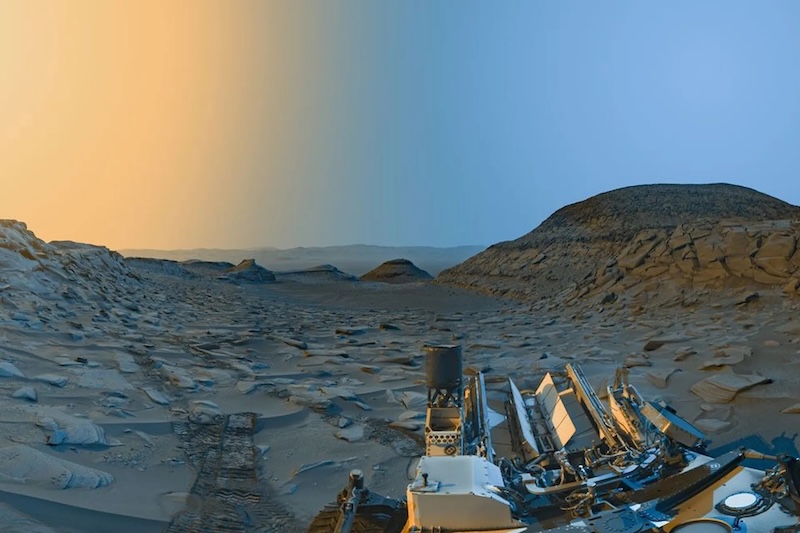
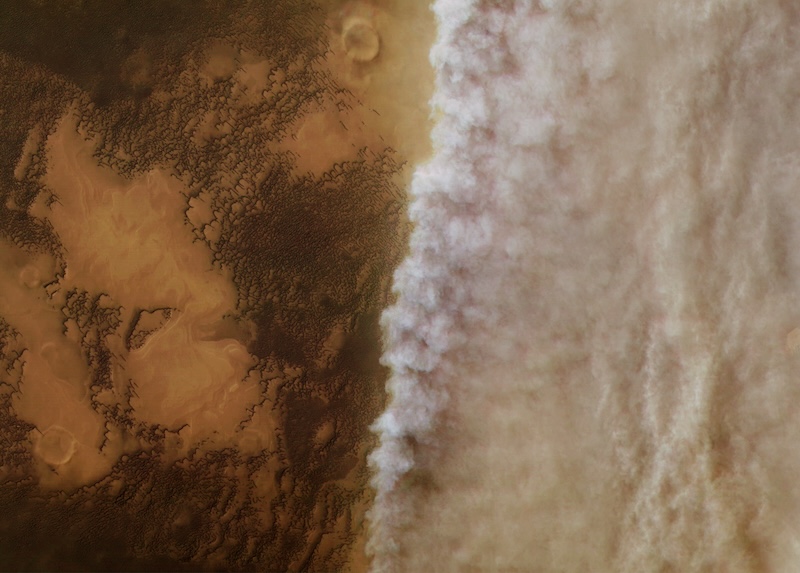
Dust storms are common on Mars. But ripples in blocks of bedrock have revealed evidence of a more intense sandstorm on Mars about 3.5 billion years ago.
Researchers in Europe are testing a prototype for walking robots on Mars or the moon. Robots like this would be faster and more autonomous than current rovers.
Are there rubies on Mars? NASA's Perseverance rover has found tiny fluorescent gems in pebbles that appear to be rubies or sapphires.
Moon base and Mars mission! NASA administrator Jared Isaacman announced them as part of a series of new NASA initiatives on March 24, 2026.
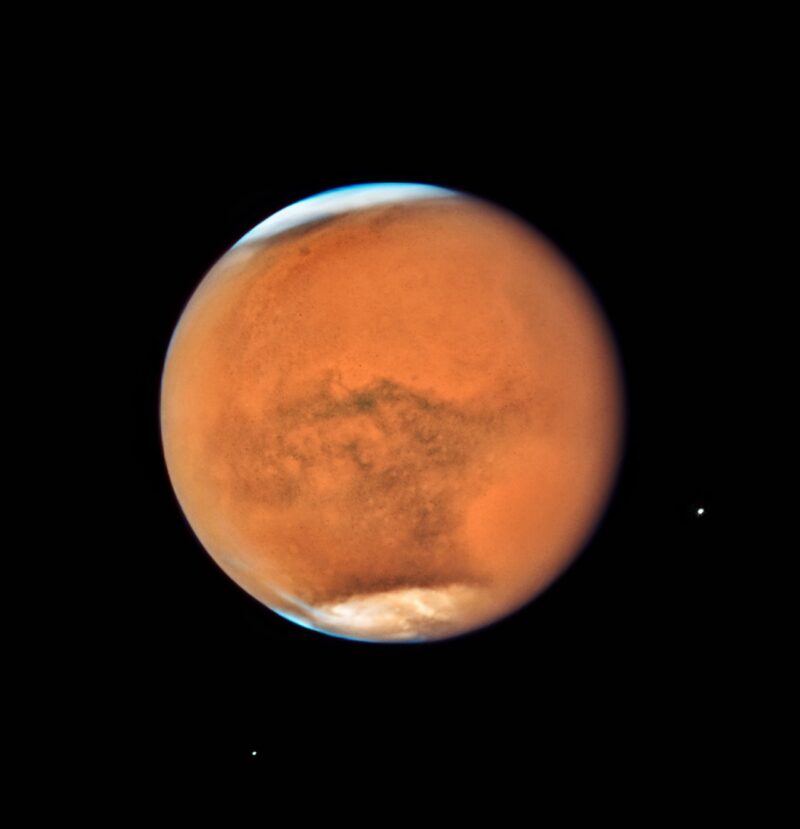
Mars emerged in the April 2026 morning sky and is visible in the morning through year's end. Its next opposition - when it's brightest - is February 2027.
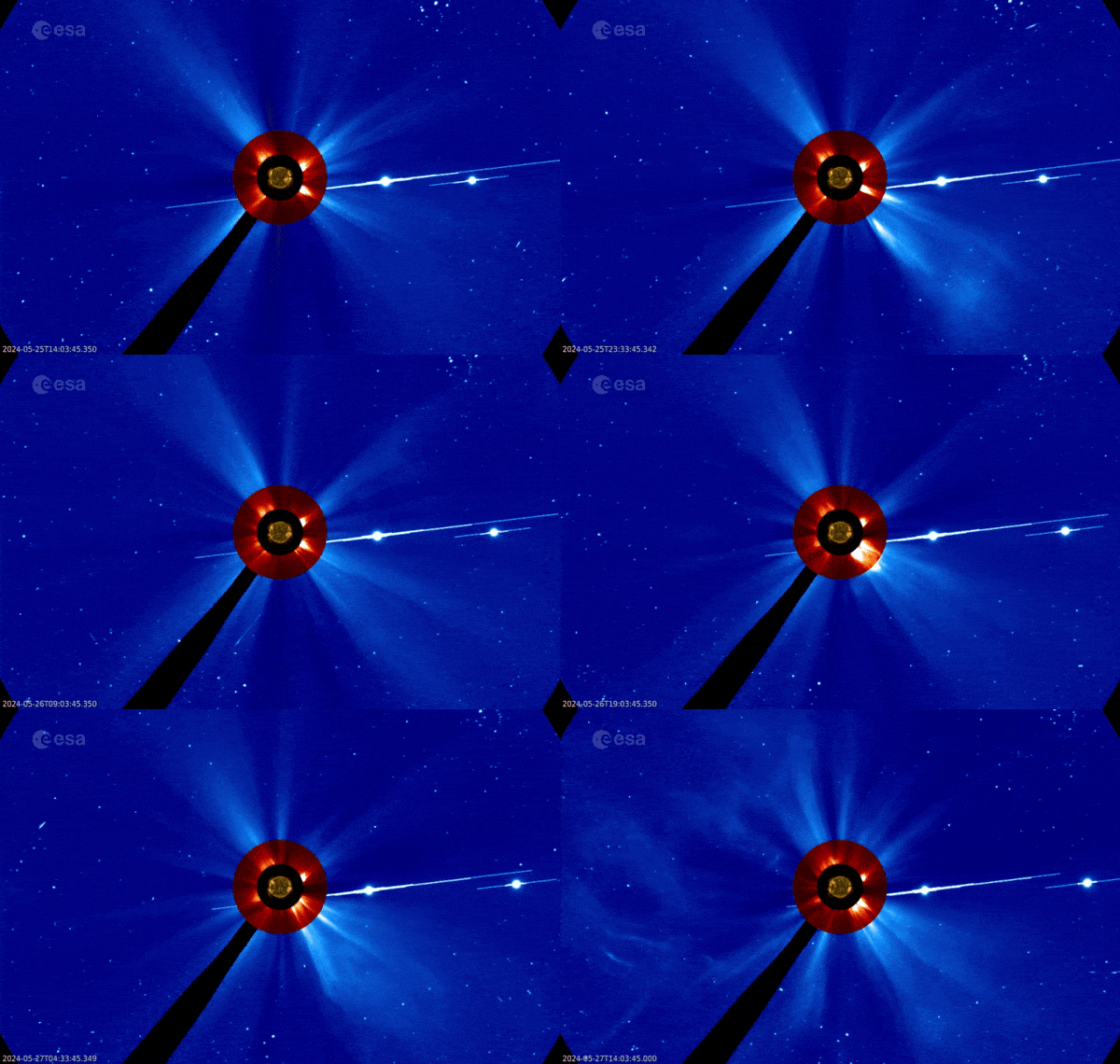
What happened when a solar superstorm hit Mars? In May 2024, the sun released a powerful X flare that caused spacecraft to glitch ... and more.
Scientists at Penn State said tiny water bears on Mars could help future astronauts survive there. They nicknamed them Tardiguardians of the Galaxy.
NASA's Curiosity rover has been investigating 'spiderwebs' on Mars. Groundwater formed these grid-like formations of ridges billions of years ago.
Scientists studied orbital data of minerals from recent volcanoes on Mars and found they were more complex than they expected, with ongoing eruptions.
NASA's Curiosity rover found complex organics on Mars, possibly remains of fatty acids. A new NASA study suggests they are difficult to explain without life.
Astronomers have discovered a possible ice-cold Earth exoplanet 146 light-years away. It might be colder than Mars, but there's a chance it's more Earth-like.
Evidence for an ancient Mars ocean keeps growing. Deltas in the Valles Marineris canyon along the former shoreline show that the ocean covered half the planet.
Computer simulations show the presence of Mars affects the cycles that cause Earth's ice ages. Without Mars, those cycles vanish.
The ancient lake in Gale crater - and other icy lakes on Mars - could have been liquid below the surface for decades thanks to seasonal surface ice.
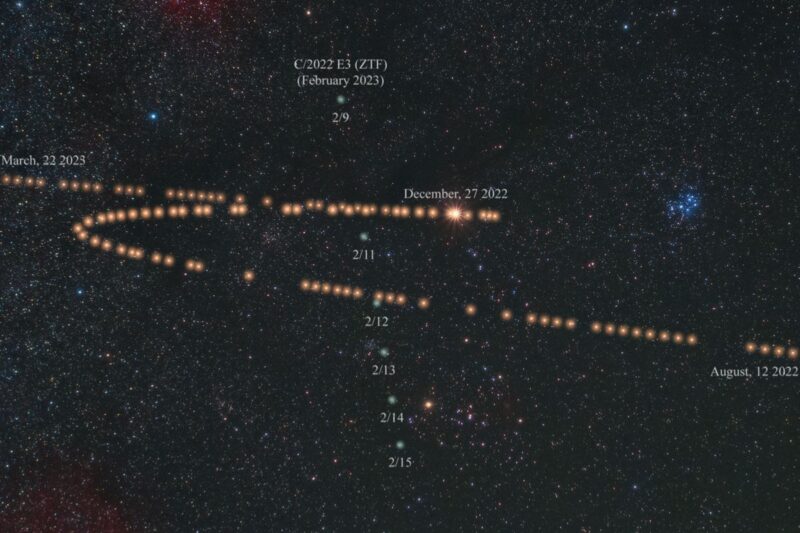
Mars won't have any retrograde - or westward - motion in 2026. What is retrograde motion? An explanation, and bizarre examples on other worlds, here.
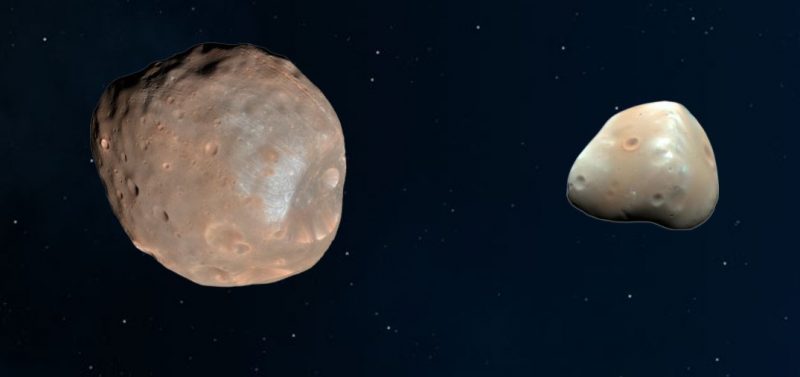
Thin, repeating sedimentary layers examined by the Curiosity rover suggest that a big, lost moon of Mars created tides in the ancient lake of Gale crater.
NASA's Perseverance rover has detected lightning on Mars 55 times. It heard the small electrical discharges with its microphone in dust storms and dust devils.