A daily update by email. Science news, great photos, sky alerts.
Jupiter's large moons - Ganymede, Callisto, Io and Europa - number four. But Saturn has just one large moon, Titan. Why? It may be the planets' magnetic fields.
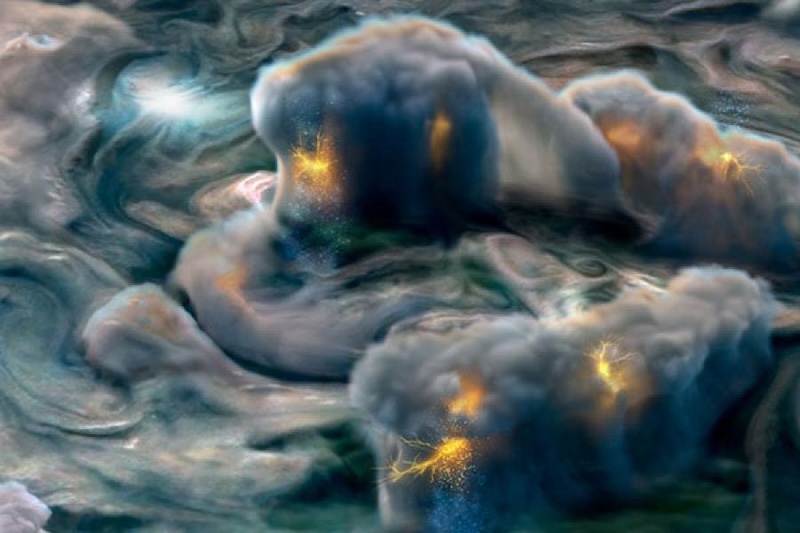
Researchers using data from the Juno spacecraft have found that lightning on Jupiter can be 100 times more powerful than on Earth, and maybe even much more.
The Minor Planet Center announced 4 more moons for Jupiter and 11 for Saturn on March 16, 2026. Their new grand totals? Saturn has 285 and Jupiter has 101.
The European Space Agency just released a new image of 3I/ATLAS - the famous interstellar comet - from its JUICE spacecraft. JUICE will reach Jupiter in 2031.
The constellation Gemini the Twins is home to Castor and Pollux. Learn more about these bright stars, visible on northern winter nights.
Giant Jupiter is closest to Earth for 2026 on January 9. Then Earth will fly between the sun and Jupiter - bringing Jupiter to opposition - on January 10.
Jupiter's closest point to the Earth in 2026, is on January 9. The distance between the sun and Jupiter will be 393 million miles, or 633 million km.
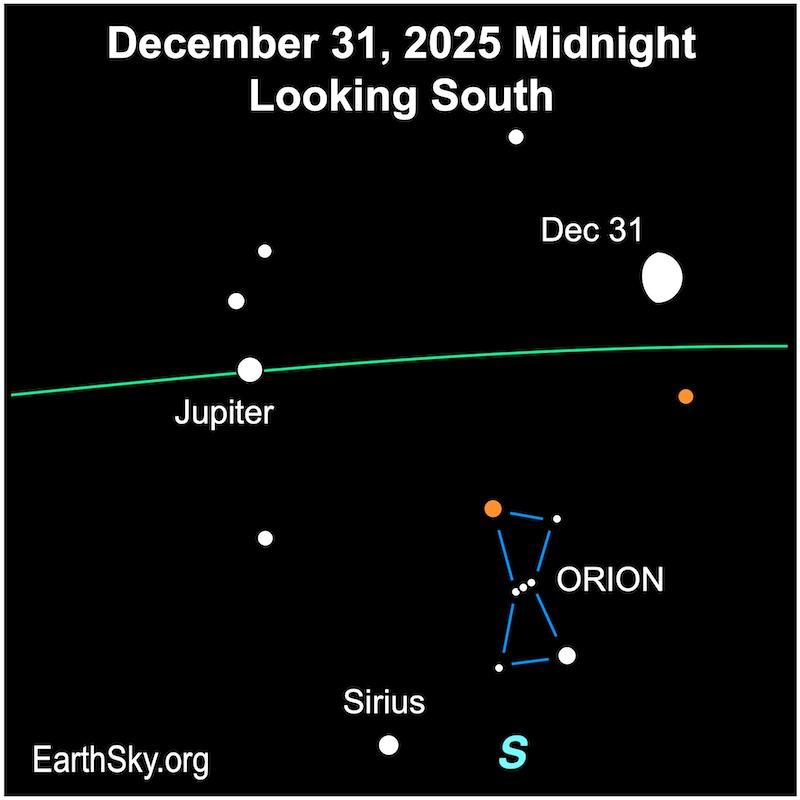
Entertain your friends on New Year's Eve by showing them the New Year's Star, the soon-to-be full supermoon and Jupiter. Sirius is highest at midnight.
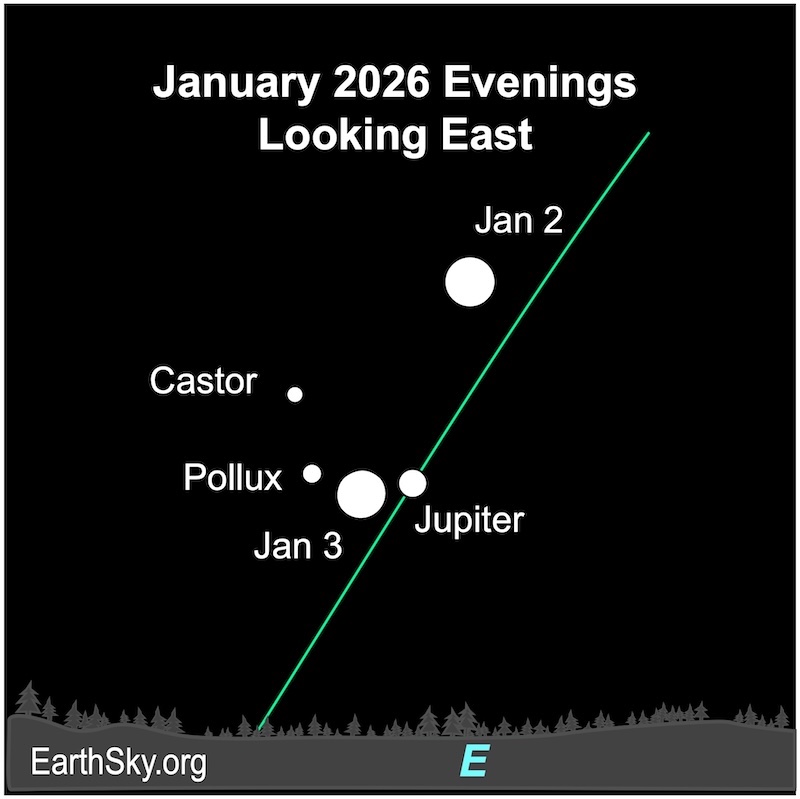
The 2026 January full moon, the Super Wolf Moon, is fullest on the morning of January 3. It'll appear full on both January 2 and 3 with Jupiter nearby.
November and December 2025 are great months for seeing Jupiter's moons Io, Europa, Ganymede and Callisto with binoculars or a small telescope.
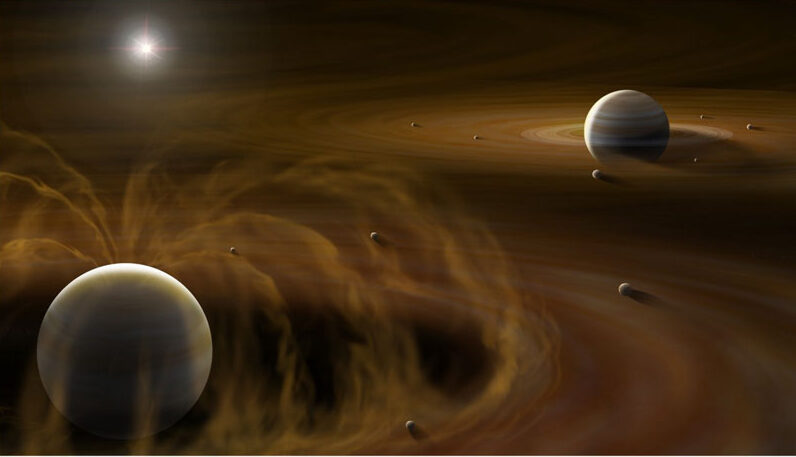
New simulations reveal how Jupiter protected Earth from the sun in our planet's early years, while also explaining a long-standing meteorite mystery.
The JUICE mission successfully performed a gravity assist around Venus on August 31, 2025, helping it pick up speed for its long journey to Jupiter.
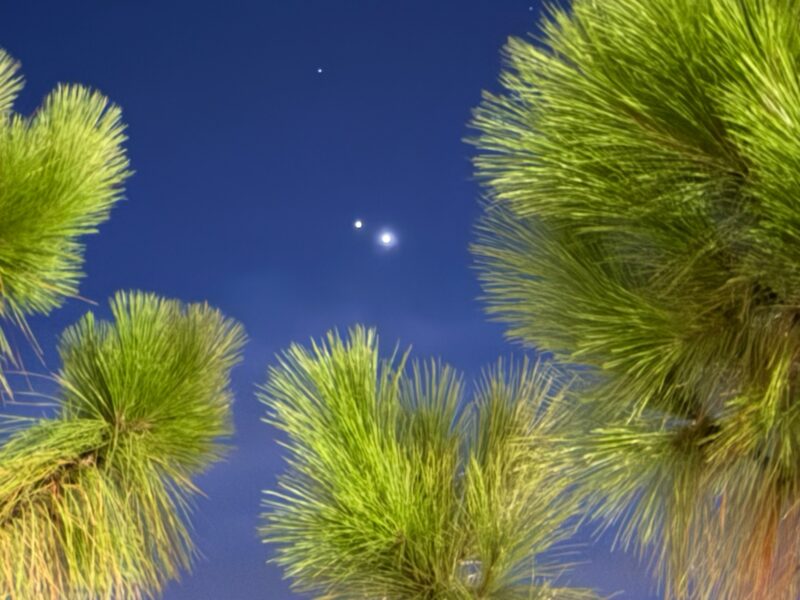
Venus and Jupiter - the 2 brightest planets in Earth’s sky – were closest together for this year Monday morning. Here are the best images.
A conjunction is when 2 objects share the same right ascension. The Venus-Jupiter conjunction of August 12 is a great one for observation!
A new study from Yale University shows how double hot Jupiters can form in binary star systems. These exoplanets are similar to Jupiter but searingly hot.
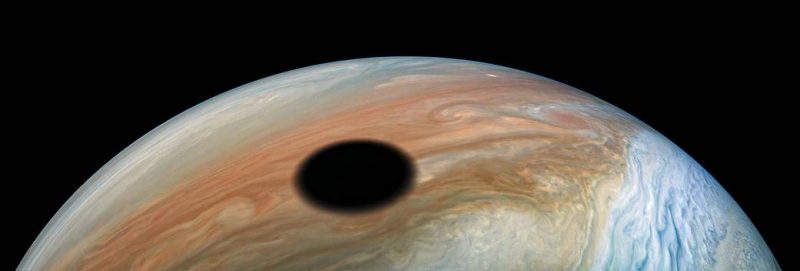
NASA's Juno orbiter has taken an in-depth look at Jupiter and Io, revealing what they are like beneath their turbulent atmosphere and fiery surface.
The Webb space telescope has captured video of Jupiter's auroras, showing them popping, fizzing and moving at great speed. See the video here.
Ammonia-water mushballs could be raining down on Jupiter, explaining why some parts of the planet's upper atmosphere are deficient in ammonia.

A strong solar wind wave slammed into Jupiter, compressing its magnetic field and creating intense auroras that created a widespread heat wave.
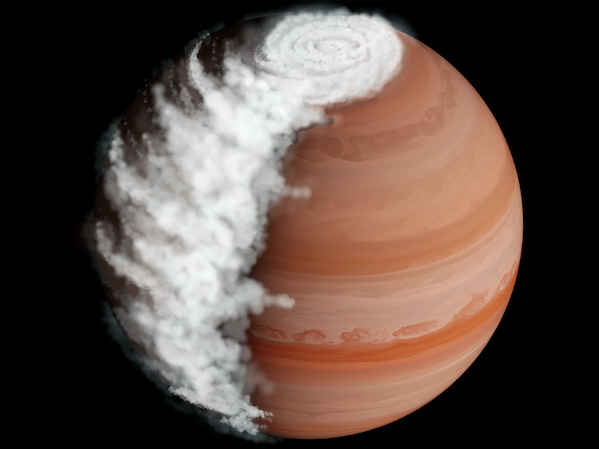
New observations by Webb of rogue super-Jupiter SIMP 0136 show that its atmosphere is more complex than thought, explaining its variations in brightness.
EarthSky Newsletter
Nearly half a million daily subscribers love our newsletter. What are you waiting for? Sign up today!
Join now to receive free daily science news delivered straight to your email.