Sign Up for Our Amazing Newsletter!

A daily update by email. Science news, great photos, sky alerts.

Your email address will only be used for EarthSky content.
Privacy Policy
Thank you! Your submission has been received!
Oops! Something went wrong while submitting the form.

EarthSky
One Earth. One Sky. EarthSky.
Tonight Space Sun Earth Human Best Places to Stargaze EarthSky Community Photos About Store Donate Contact Us
Subscribe
Tonight
Tonight Brightest Stars Astronomy Essentials Moon Phases Clusters Nebulae Galaxies Favorite Star Patterns Constellations
Astronomy Essentials
Tonight
Visible planets and night sky guide for May
Marcy Curran
May 14, 2026
Favorite Star Patterns
The Southern Cross: your guide to due south
Editors of EarthSky
May 14, 2026
Favorite Star Patterns
How to see the Southern Cross from the Northern Hemisphere
Bruce McClure
May 14, 2026
Space
Sun
Earth
Human
Human Spaceflight
Best Places to Stargaze
Community Photos
View Community Photos Trending Submit a Photo
About
Store
Donate
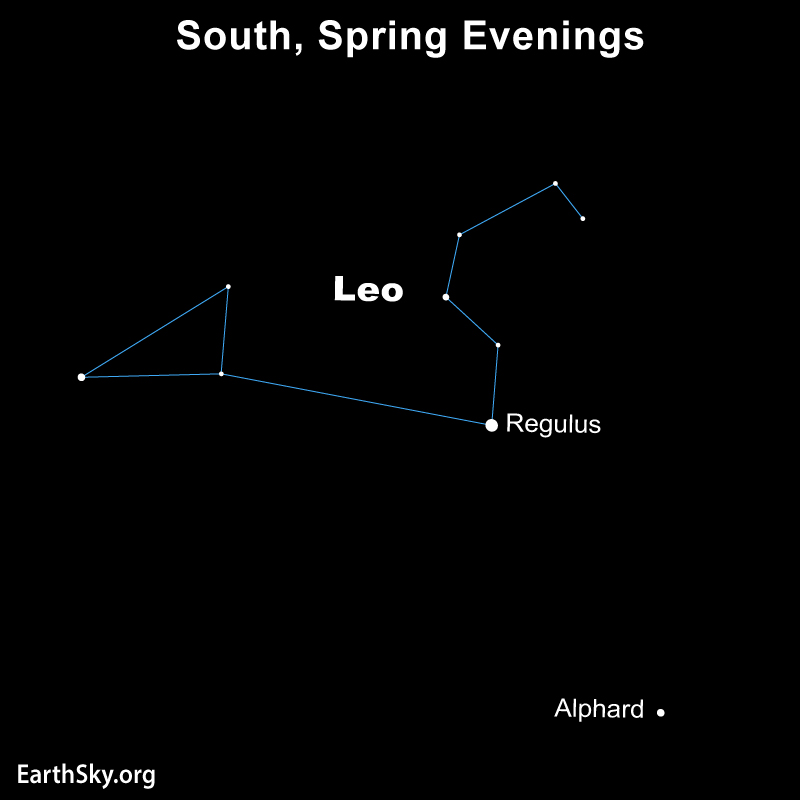
Sky chart: Animal-shaped constellation with Regulus labeled and Alphard at lower right.

Lonely Alphard is the brightest star in Hydra

Alphard is the "heart" and brightest star in the constellation Hydra the Water Snake, and it represents a welcome sign of spring for the Northern Hemisphere.

Read More
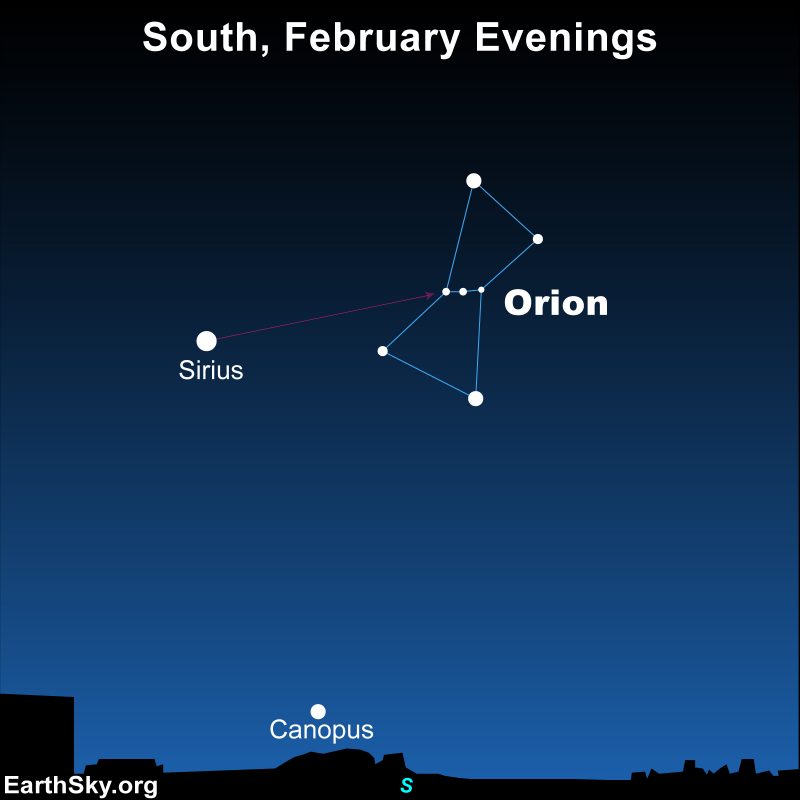
Constellation Orion (looks like an hourglass), bright star Sirius to the left and star Canopus next to horizon.

Can you see Canopus, the 2nd-brightest star?

Here's how to spot Canopus, the 2nd-brightest star in the sky as seen from Earth, on February evenings. It’s located far south on the sky’s dome.

Read More
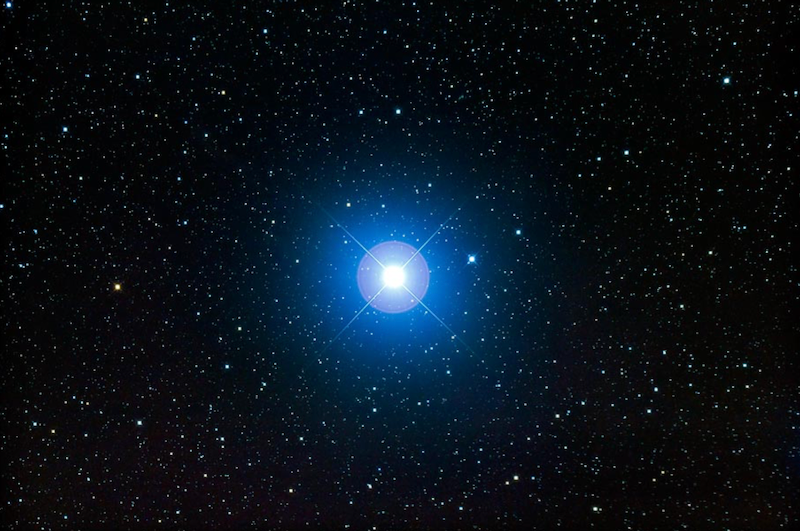
Wide array of bright but slightly fuzzy stars, mostly blue-white but one reddish, over dark landscape.

See Sirius, the brightest star in the night sky

Sirius is the brightest star as seen from Earth and is visible from both hemispheres. It lies just 8.6 light-years away, in the constellation Canis Major.

Read More
A large, bright, blue-white star in a field of many stars.

Blue-white Rigel is Orion’s brightest star

Blue-white Rigel shines as the brightest star in the constellation Orion the Hunter. It's a hot massive star, that someday will explode as a supernova.

Read More
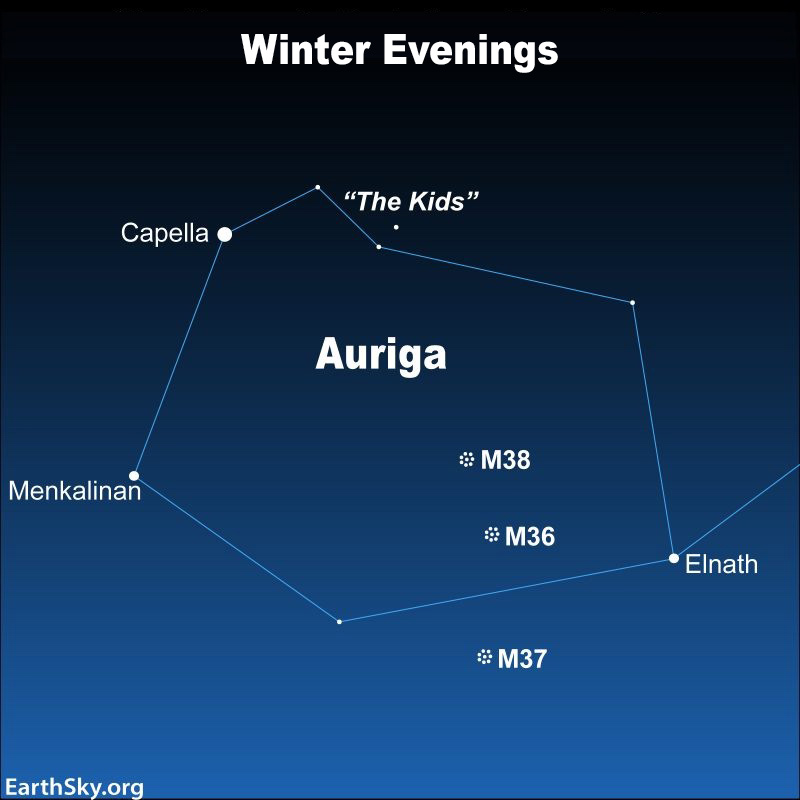
Star chart showing the constellation Auriga with Capella, 2 other stars, and 3 Messier objects labeled.

Capella is one of the sky’s brightest stars

The 6th-brightest star in the night sky, Capella, in the Northern Hemisphere constellation Auriga the Charioteer, is also a point of the Winter Hexagon.

Read More
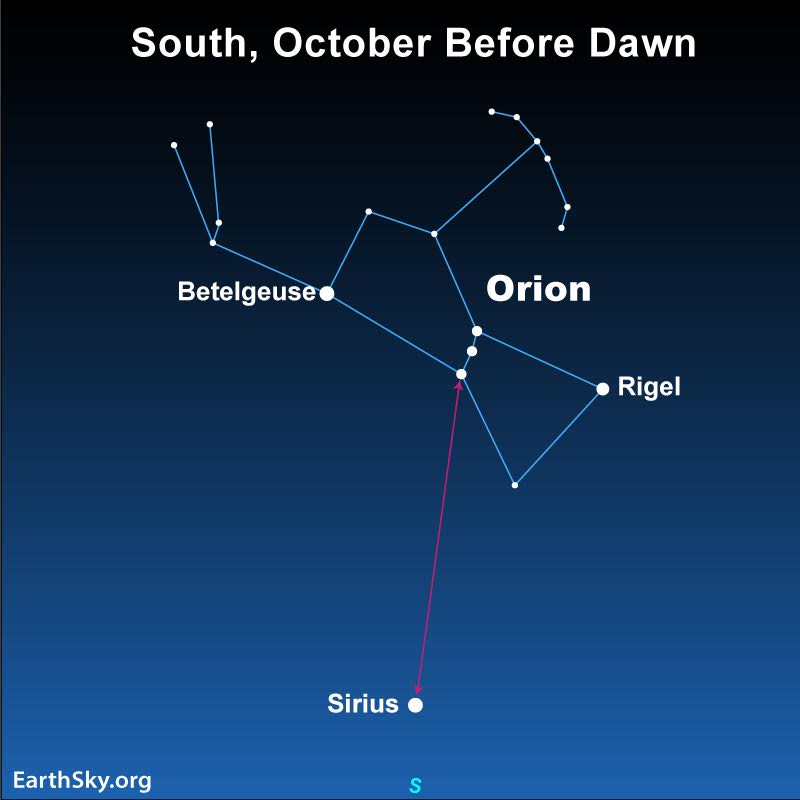
Star chart with Orion and arrow from 3-star Belt to lone star Sirius below.

See brightest star, Sirius, in your morning sky

Out late at night or before dawn? Look for the sky's brightest star, Sirius, a brilliant beauty. You'll know it's Sirius if you see Orion's Belt pointing to it.

Read More
Star chart: 4 labeled stars at ends of cross arms and small dots for a labeled star cluster.

Acrux is the brightest star in the Southern Cross

Acrux, also called Alpha Crucis, is the brightest star in the constellation Crux, the Southern Cross. And it is not 1, but 2 stars.

Read More
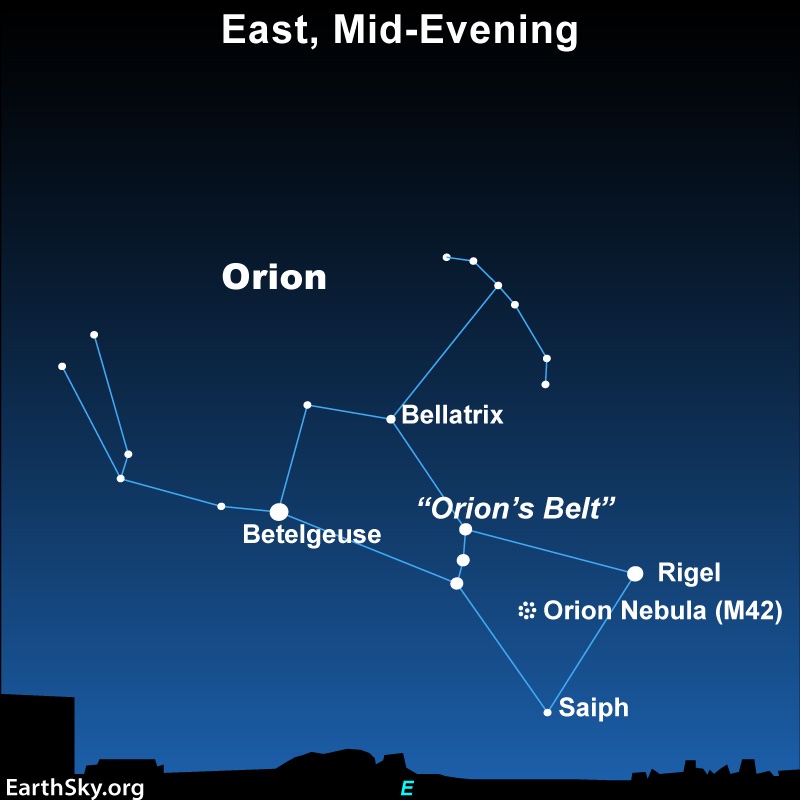
Star chart showing constellation Orion with Rigel, Betelgeuse and Bellatrix marked.

Bellatrix is Orion’s 3rd-brightest star

Orion's shoulder star Bellatrix has a name that means "female warrior." Bellatrix is one of the hottest stars you can see without optical aid.

Read More
Dark sky over buildings with stars labeled and Southern Cross outlined.

Mimosa, 2nd-brightest star in Crux, the Southern Cross

To see Mimosa, you need to be in the Southern Hemisphere, where it is a prominent star, or at the latitude of New Orleans, Hawaii, Cairo or New Delhi.

Read More
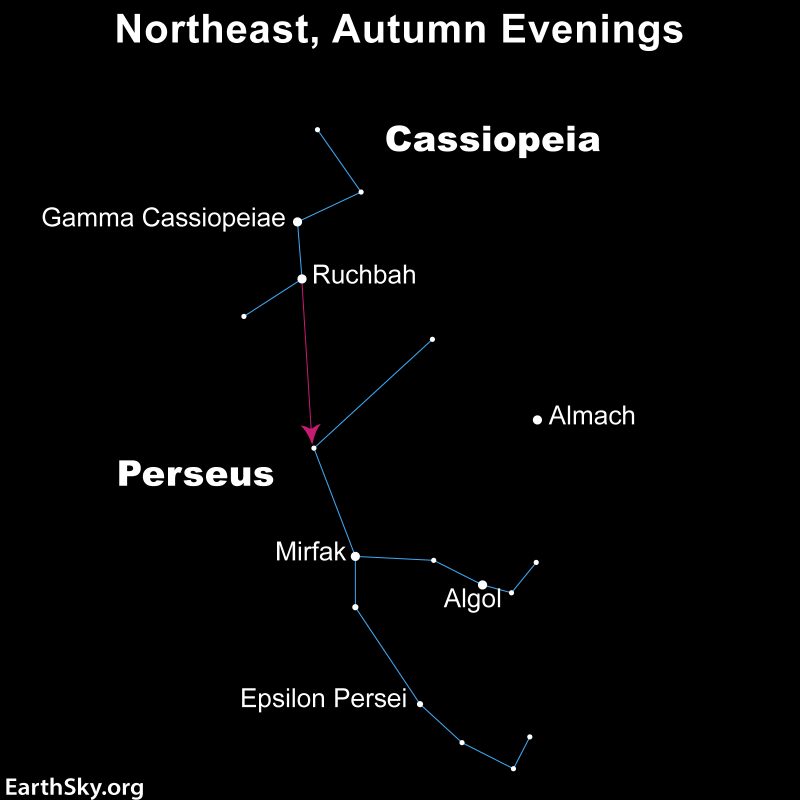
Diagram of constellations Cassiopeia and Perseus with arrow from one to the other and bright stars labeled.

Mirfak is the brightest star in Perseus the Hero

Mirfak is the brightest star in Perseus and is visible even from light-polluted locations. This star is a member of the Alpha Persei Moving Cluster of stars.

Read More

brightest-stars

a:9:{s:9:”post_type”;s:4:”post”;s:14:”posts_per_page”;s:1:”4″;s:6:”offset”;i:0;s:7:”orderby”;s:4:”date”;s:5:”order”;s:4:”DESC”;s:8:”taxonomy”;s:8:”category”;s:5:”terms”;a:1:{i:0;i:48;}s:12:”has_password”;s:4:”both”;s:11:”post_status”;s:7:”publish”;}

Read More
Venus, Aldebaran and the Pleiades cluster in the east before dawn.

Venus brightest, near star Aldebaran, around July 10

Even though - as seen from Earth - Venus appears only slightly more than 1/4 illuminated on July 10, 2020, it is nonetheless shining at its brightest in our morning sky! Look east before sunup for Venus. The bright star nearby is Aldebaran.

Read More
Brightest galaxy and first-generation stars

The newly found galaxy, labelled CR7, is three times brighter than the brightest distant galaxy known up to now. It may contain some of the first stars.

Read More
Bright, thin, white concentric circles around Polaris, with a brighter, yellowish streak across the bottom.

Polaris is the present-day North Star of Earth

Many people think Polaris is the brightest star, but it's only 48th in brightness. Still, Polaris is famous because the entire northern sky wheels around it.

Read More

Will the Blaze Star explode in 2026? How to see it

We're still waiting for the Blaze Star to go nova! Will it happen in 2026? Here's how to find Corona Borealis so you're ready when this star goes kablooey.

Read More
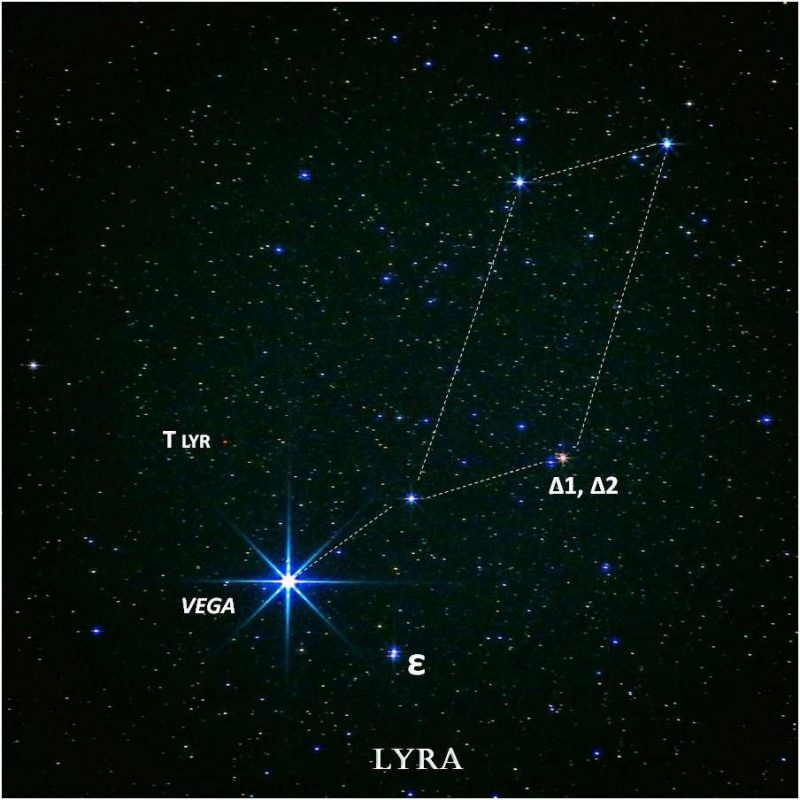
Kite-shaped constellation with bright blue-white star at bottom, and 4 other stars in Lyra marked.

Vega is a bright bluish star on May evenings

The blue star Vega is the brightest light in the distinctive constellation Lyra the Harp. Vega is easy to spot in May by looking northeast in the evening.

Read More
A large, round, symmetrical ball of stars, so dense in the middle it appears solid white.

Meet Omega Centauri, a giant globular star cluster

Omega Centauri is the Milky Way's largest globular star cluster. It contains about 10 million stars. Find out how to see this beautiful behemoth here.

Read More
Man-shaped constellation with bent arms and legs, and labeled stars.

Hercules is between 2 bright stars: Vega and Arcturus

The bright stars Arcturus and Vega can help you find the constellation Hercules and its Keystone asterism. Hercules is home to 2 fabulous globular clusters.

Read More
Chart with rings around sun at 2, 4, and 6 light-years with labeled stars.

Alpha Centauri, the star system closest to our sun

Our closest stellar neighbors are the 3 stars that make up the Alpha Centauri system. They lie just over 4 light-years away from us.

Read More
A dipper-shaped star pattern with a pink arrow going from 2 stars to a distant star in another dipper.

Kochab and Pherkad: Outer bowl stars of the Little Dipper

Kochab and Pherkad are stars in the Little Dipper asterism. Maybe you can find the Big Dipper but not the Little Dipper? This post will help.

Read More
EarthSky YouTube Channel
YouTube
Twitter
Facebook
Instagram
Store
Donate
© 2025-2029 Earthsky Communications Inc.
WEbsite by Milkyway.co
About
Contact Us
Terms & PRivacy