



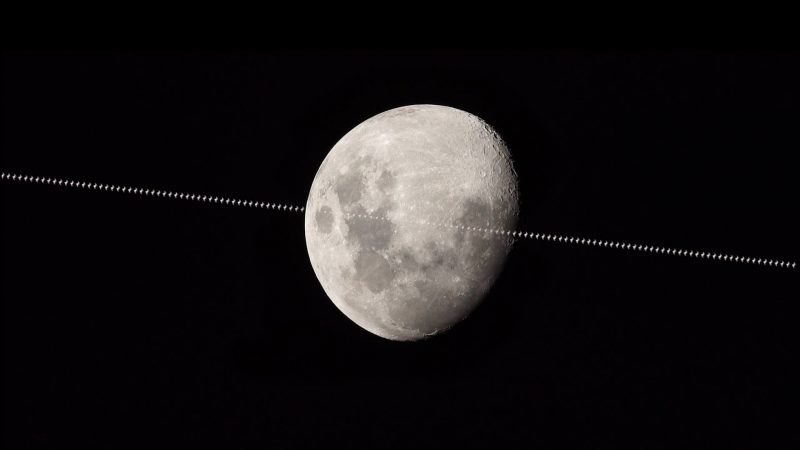
Tonight’s ISS/moon blend. Quite close to home this time – 15 kilometers [9 miles] to the center line … always lovely to see the conjunction with the unaided eye!
Thank you, Colin! Visit Colin Legg Photography on Facebook.
Want to capture a photo like this? Learn when ISS will cross the moon from your location from these sources:
2-day map where ISS crosses the moon, from CalSky
2-day map where ISS crosses the sun, from CalSky
Here’s a list of the sort of equipment you might need, from an article at NASA (substitute your favorite gear):
– Digital Single-Lens Reflex (DSLR) camera
– 600 mm lens (or the largest you have)
– 2X telephoto lens converter (amplifies lens)
– Trigger cable (minimizes camera shake)
– Tripod (heavy duty works best)
– Sandbag (keeps tripod stable)
And here are some good articles that’ll help you understand the process:
How to Photograph the ISS Transiting the Moon and Sun, from AmericaSpace
Bottom line: ISS transiting the moon, June 2018.
How to spot ISS in your sky, from EarthSky
Help EarthSky keep going! Please donate what you can to our annual crowd-funding campaign.
Like what you read?
Subscribe and receive daily news delivered to your inbox.
More from
Deborah Byrd


Visible planets and night sky guide for October

Stargazing tips! 10 great tips for beginning astronomers
Mars calendar year begins September 30: Happy New Year, Mars!
Alpha Cephei, or Alderamin, is a fast-spinning star



