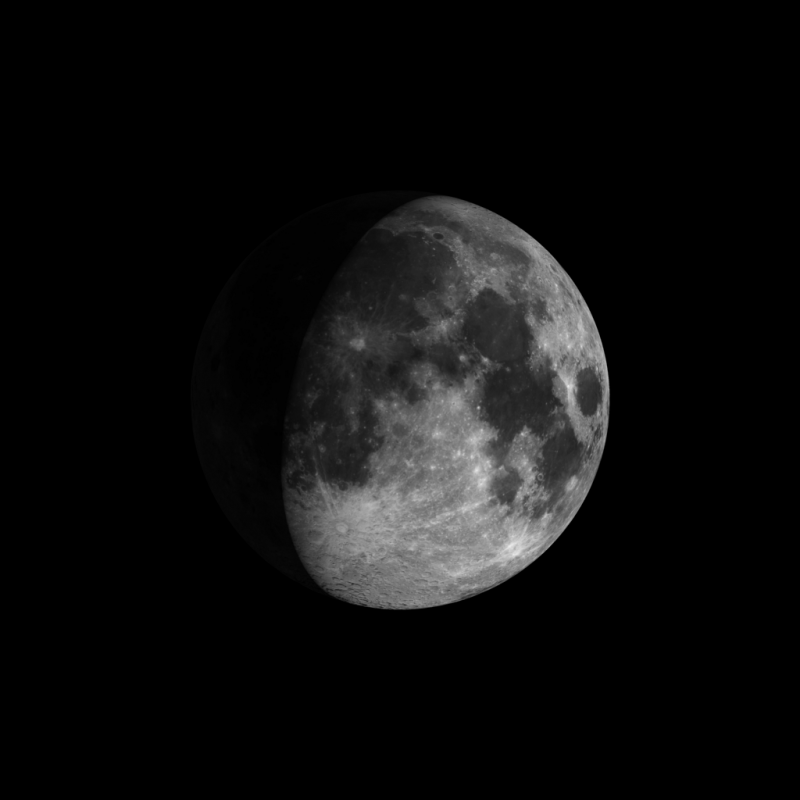
Tonight – September 30, 2017 – see if you can make out the dark areas on tonight’s waxing gibbous moon. These smooth, low-lying lunar plains are called mare (singular) or maria (plural), the Latin words for sea or seas. You should be able to see the darkened portions on the moon with the eye alone. This collection of lunar plains – the solidified remnants of ancient seas of molten magma – actually makes the near side of the moon reflect less light than the far side does, which lacks the maria. So, in terms of reflectivity, the moon’s near side is its darker side.
If you’d like to scrutinize the maria more closely, use binoculars or the telescope. Remember, the view will be better around the time of sunset or early dusk – before the dark of night accentuates the moon’s glare.
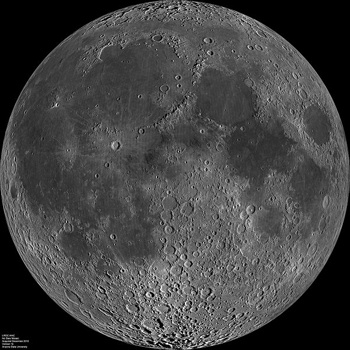
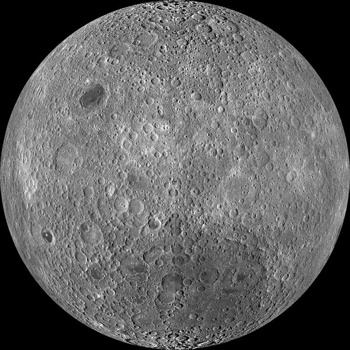
In times past, astronomers really thought the dark areas contrasting with the light-colored, heavily-crated highlands were lunar seas. In some ways they were correct, except that these were seas of molten magma instead of water. Now solidified, this molten rock came from volcanic eruptions that flooded the lunar lowlands. However, volcanic activity – at least from basaltic volcanoes – is now a thing of the moon’s past.
For the most part, lunar maria are found on the near side of the moon. In this respect, that makes the near side – not the far side – the dark side of the moon.
Maria cover about 30% of the near side but only 2% of the far side. The reason for this is not well understood, but it has been suggested that the crust on the moon’s far side is thicker, making it more difficult for magma to reach the surface.
The lighter-colored highland regions of the moon are composed of anorthosite, a certain kind of igneous rock. On Earth, anorthosite is uncommon, except for in the Adirondack Mountains and the Canadian Shield. For this reason, people in this part of the world like to fancy that the moon originated from their home turf.
The prevailing theory states that the moon was formed when a Mars-sized object crashed into the Earth, creating a ring of debris that eventually condensed into the moon. I suppose time will tell whether this explanation for the moon’s origin is true or false.
Bottom line: Strange as it may seem, the moon’s near side is really its dark side. By that we mean the near side of the moon reflects less light – due to a collection of dark, low-lying lunar plains that are the solidified remnants of ancient seas of molten magma.
The lunar calendars are almost here! They’ll help you with the moon phases throughout the year.
Like what you read?
Subscribe and receive daily news delivered to your inbox.
More from
Bruce McClure


The Andromeda Galaxy: All you need to know

Are day and night equal on the equinox? Not exactly
See the year’s fastest sunsets and sunrises around equinoxes
Equinox fun: Track the sun’s shift now until the solstice