Newport, OR, USA
09:30 pm
Celestron EdgeHD 9.25"
AM5 mount
ZWO ASI294MM Pro camera
R, G, B, Hydrogen alpha, Oxygen III and Sulfur II filters.
Stacked with AstroPixel Processor and edited in PixInsight.
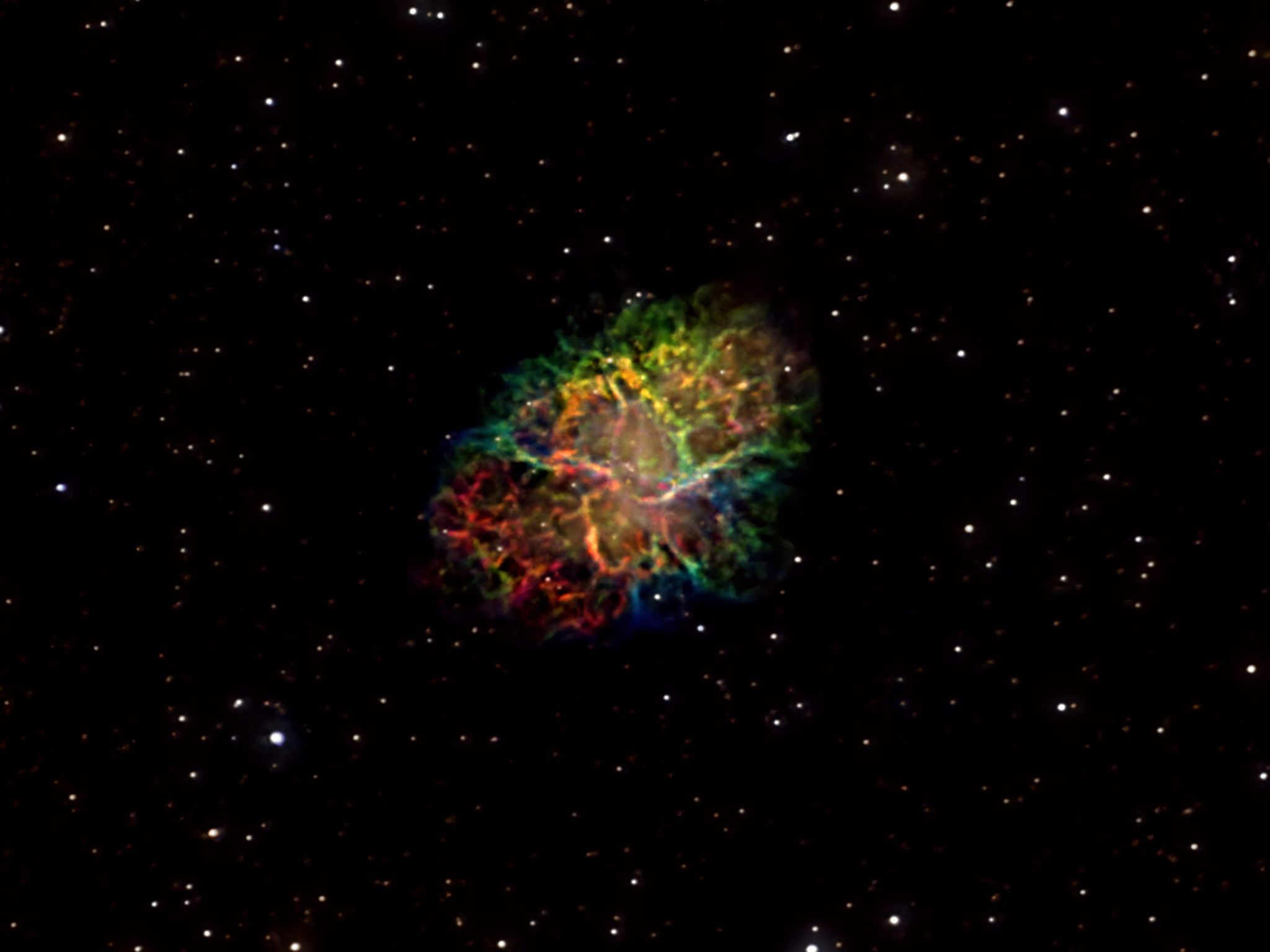
When Charles Messier was looking for Halley's Comet, he kept coming across a fuzzy patch he realized didn't move like a comet. So, he started a journal of these annoying distractions and designated the fuzzy patch "M1." Ages ago, a massive star spent the last of its fusion fuel and experienced a massive implosion that happened so fast, the inner part of the star sent shockwaves that ejected the outer portion. When the light eventually reached earth, it was so bright it could be seen by day for several years. References around the world have been found for a "wandering star" that suddenly appeared and eventually faded.\
I trained my telescope on the spot and recorded photons for 12 hours. I took 3-minute exposures in the red, green, and blue spectrums and combined them for the first image. I also took 5-minute exposures of hydrogen alpha and oxygen III emissions and 7-minute exposures of sulfur II. These mapped to a SHO palette and blended with the visible light data.
Everything was captured using a ZWO 294MM Pro in the "unlocked" bin 1x1 mode at 8k by 4k resolution, then cropped to spotlight the nebula.
Like what you read?
Subscribe and receive daily news delivered to your inbox.
More from
David Callejas


Sometimes Island on Lake Travis
Sunset on Lake Travis
Ready, set, explore Earth from home
Two planets destined to die as their star expands