Taipei, Taiwan
10:15 pm
Canon R7 + SIGMA 60-600mm F4.5-6.3 S DG OS HSM Sports
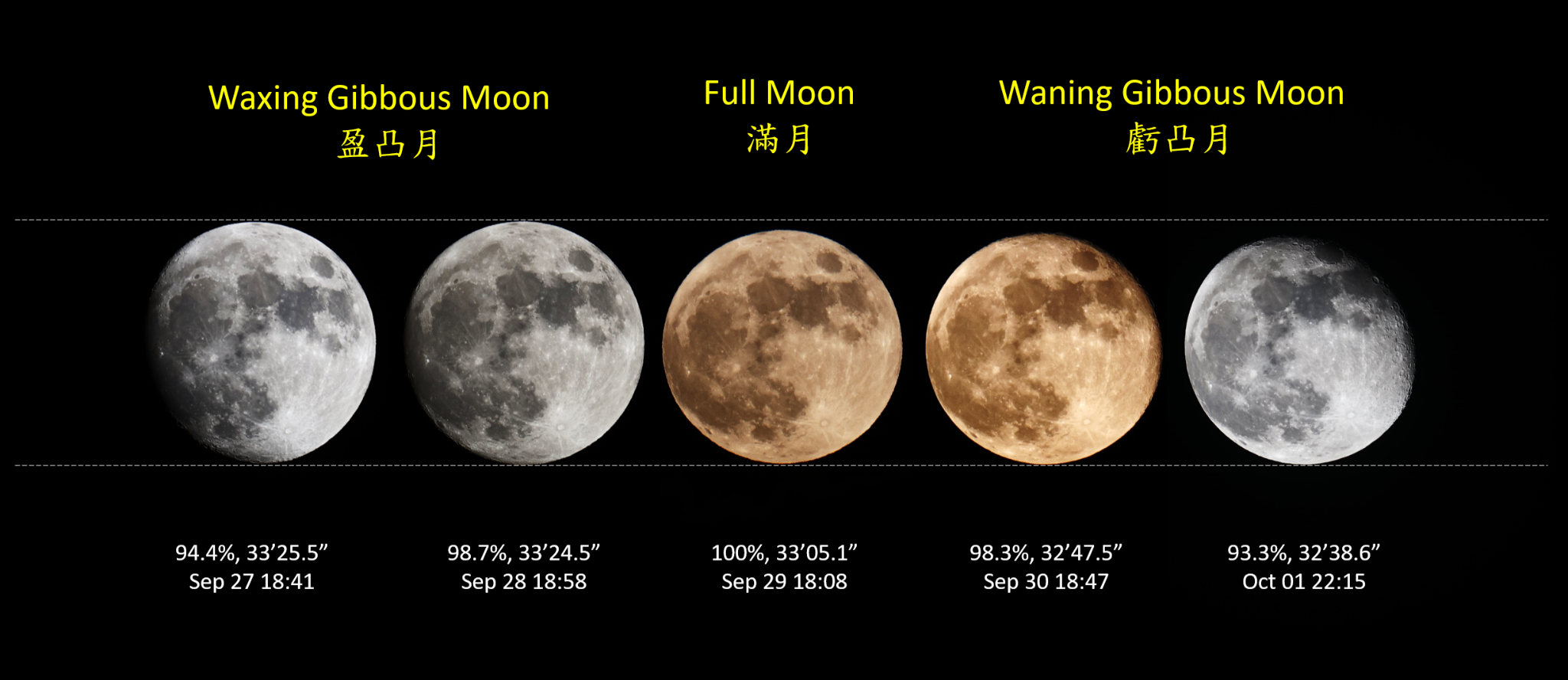
Use PowerPoint to combine the moon shots taken for five consecutive days for comparison.
The weather was very clear during this year's Mid-Autumn Festival, so the phase changes of the moon around the full moon, spanning two days, were all documented! It provided a perfect opportunity to observe how the moon transitions from waxing gibbous to full moon and, subsequently, how the full moon begins to wane into a waning gibbous moon. Additionally, the apparent diameter of the moon (which is essentially its distance from Earth) was also continuously changing. Of course, these changes are not visible to the naked eye. As for the color of the moon, it is related to its position in the sky. When the moon is low in the sky, it tends to appear yellow or orange due to scattering effects. As the moon rises higher in the sky, it becomes more distinct and appears in black and white. The Chinese names of the moon phases are also provided in the picture.
Like what you read?
Subscribe and receive daily news delivered to your inbox.
More from
David Callejas


Sometimes Island on Lake Travis
Sunset on Lake Travis
Ready, set, explore Earth from home
Two planets destined to die as their star expands