NOAA’s winter weather outlook reflects strong El Niño
The National Oceanic and Atmospheric Administration (NOAA) has released its winter weather outlook for the United States, and it says the season will be heavily influenced by the strong El Niño.
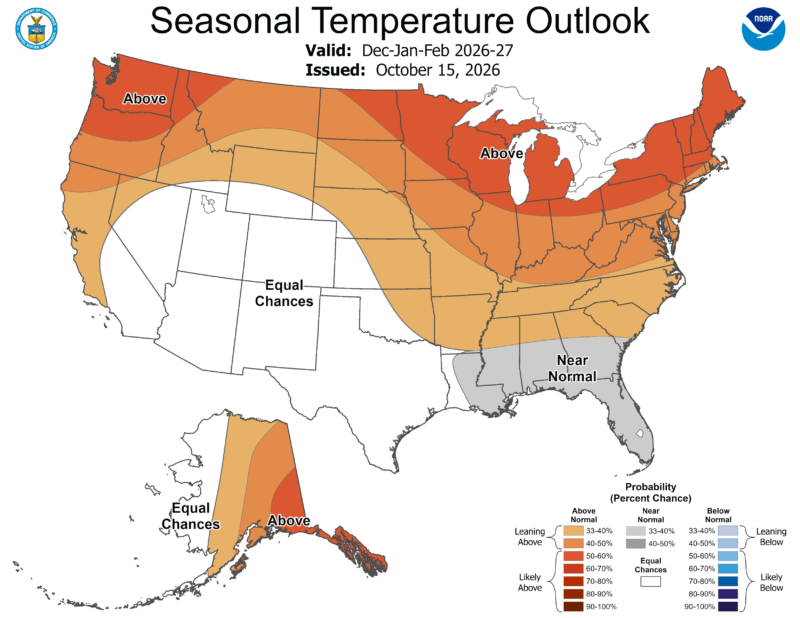
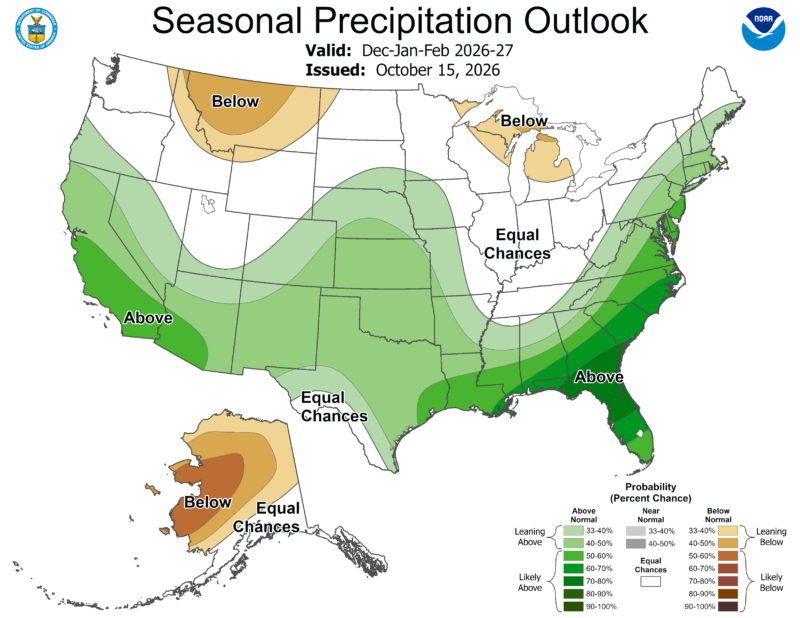
Warmer-than-average temperatures are expected for much of northern North America including Alaska. And wetter-than-average weather is expected across the southern half of the United States, as well as up the East Coast.
While this outlook doesn’t give an outlook of what to expect in terms of snowfall (snowfall is only accurately forecast within a week of the snow event) it’s still a good overview for how to plan for what winter could bring across North America and the United States.
El Niño, the jet stream, and the winter weather outlook
El Niño helps shift the Pacific jet stream, which is a band of strong winds that impacts weather patterns and storm tracks across North America.
Since El Niño is the warm phase of ENSO, or El Niño Southern Oscillation, the warm water over the Pacific Ocean creates more evaporation and helps shift the jet stream farther east and south.
Jet streams often act as pathways for storm systems, so this shift can send lots of tropical moisture into California, but keeps the Pacific Northwest drier and warmer. This storm track would also keep much of the southern United States wetter than normal due to an active pattern of storm systems.
The jet stream farther south would be great news for areas across the South dealing with drought conditions. Due to the likelihood of an active storm pattern during the winter months, the drought is expected to improve — or even completely end — for much of the Southwest, South, and parts of the East Coast.
Unfortunately, active weather in the south means calmer weather farther north. That means the northern Rockies, parts of the northern Plains, eastern Oregon and Washington will likely see droughts develop or get worse.
El Niño at the wheel
The current El Niño continues to strengthen, and is on track to be one of the strongest on record since 1950 according to the Climate Prediction Center. This means that it will most likely impact the weather, which is why El Niño is playing such a significant role in NOAA’s winter outlook.
It’s important to note that, while we have an overall idea of what to expect for the winter season, the weather is still best and most accurately forecast within a week’s timeframe. As always, stay updated with your local weather with your local National Weather Service office throughout the winter season.
Bottom Line: NOAA’s winter weather outlook says El Niño will bring a warm and wet winter for much of the U.S.
Like what you read?
Subscribe and receive daily news delivered to your inbox.
More from
Rachel Duensing


Isaias is a major hurricane, headed for the Gulf Coast